

With the beginning of the reform and opening up, China's home decoration industry has risen rapidly worldwide. With the gradual increase in environmental awareness, consumers are shifting their focus to products with wooden veneers as surface decorations, which provide similar effects to solid wood at a lower cost, meeting the modern demands for environmental friendliness.
The trend of minimalist luxury is surging, and "stylish and valuable" engineered veneers are becoming popular. But what exactly is an engineered veneer, and how does it differ from a natural veneer?
What is an engineered veneer?
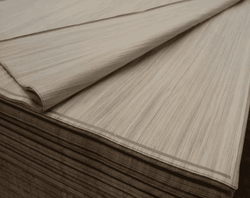
The engineered veneer is a wood veneer material produced by processing fast-growing wood using principles inspired by bionics and beautifying it through recombination. This results in a wood veneer material with improved performance.
Material characteristics:
Compared to natural veneers, engineered veneers offer a more diverse range of textures and colors. They eliminate defects such as dead knots, insect holes, and white edges in natural veneers, providing a smoother and more consistent surface appearance. Additionally, they have a high wood utilization rate, are easy to process, can be replicated, and are more affordable.
1. Correcting natural veneer defects:
During the natural growth process, native wood is inevitably affected by factors such as climate, geography, and tree species, resulting in flaws and performance deficiencies. Engineered veneers correct the natural defects of native wood and compensate for its performance deficiencies.
2. Rich texture and color:
Engineered veneers are designed using computer software, allowing for the creation of various textures and colors to meet the personalized needs of consumers.
3. Wide range of raw materials:
Engineered veneers can be made from a wide range of light-colored and easily processed wood, thereby protecting forest resources.
4. Wide decorative dimension range:
Engineered thin wood overcomes the limitations of small diameter sizes found in natural thin wood, allowing for different dimensions based on specific needs.
However, it should be noted that the production process of engineered veneers is complex and requires strict quality control to achieve satisfactory results.
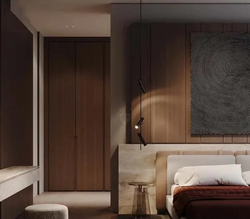
Classification of materials:
1. Textural classification includes straight grain, crown grain, flame grain, wavy grain, and dot grain.
2. Type classification includes pomelo wood, red oak, white oak, sourwood, black ebony, ironwood, sapelli, zebra wood, black walnut, cherry, and chicken wing, among others.
In brief, the engineered veneer is the "cloning technology" in the industry, capable of imitating various natural veneers' textures and colors. Therefore, for some endangered or regulated precious woods, many businesses use technological veneers to imitate their textures and colors, satisfying people's love and demand for rare and precious woods.
Difference between natural veneer and engineered veneer:
1. Veneer types:
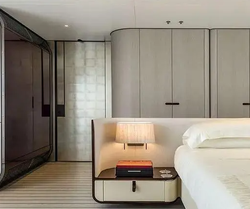
"Natural veneer" refers to thinly sliced veneers directly cut from natural wood, with a thickness of around 0.2-0.5mm. They are widely used in furniture, luxury car, aircraft, yacht interiors, flooring, musical instruments, and other fields.
"Engineered veneer" is the "cloning technology" in the veneer industry, capable of imitating various natural veneers' textures and colors. It is suitable for furniture, doors, windows, decorations, flooring, wooden crafts, and more.
Creative use - Veneer Inlay:
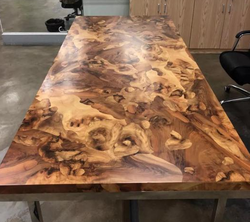
Veneer inlay, also known as veneer marquetry or veneer mosaic, is a craft that involves combining and assembling veneers based on their textures and colors to create exquisite geometric or artistic patterns.
1. Simple inlay:
The primary application of veneer is through single-sheet inlay. This includes edge matching, face-to-face matching, reverse matching, boxwood inlay, reverse boxwood inlay (box inlay), V-shape inlay, double V-shape inlay, diamond inlay (square inlay), and various other veneer inlay methods.
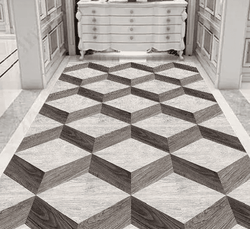
2. Geometric inlay:
Geometric patterns are very common in veneer inlay. By dividing a single veneer into equal parts, such as 2 or 4, and then assembling them, the wood grain achieves a high degree of symmetry, creating geometric patterns.
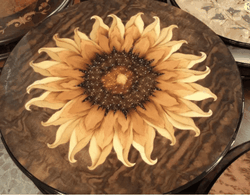
3. Artistic patterns:
Artistic patterns are created by craftsmen utilizing the differences in texture or color among different types of wood. They are made by designing patterns, cutting, and assembling the veneers.