


Reconstituted Veneer
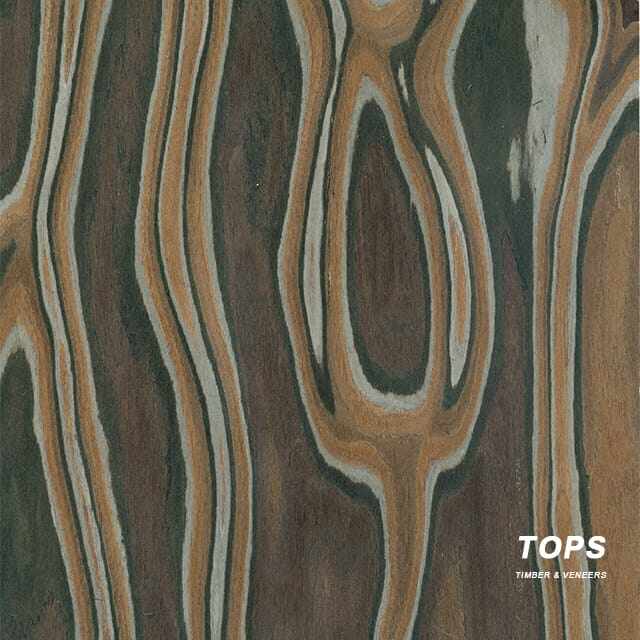
Reconstituted veneer, also known as engineered veneer, composite wood veneer or recomposed veneer, is a recomposed veneer inspired by the natural beauty of wood and other graphic patterns. It offers much bigger variety of grains than natural veneers.
With over 20 years of experience in the wood industry, Tops Timber and Veneers Limited have established a reputable fame in providing high-quality wood materials and unparalleled expertise. At Tops Timber and Veneers Limited, we specialize in international business, offering our products and services to clients around the globe. Our extensive experience in international markets has taught us the importance of adhering to the highest quality standards. We strictly follow international grading rules to ensure that our wood materials meet the rigorous demands of our diverse clientele. Whether it's hardwood, softwood, or engineered wood products, we guarantee that each piece is meticulously inspected and graded to meet industry standards.

Our Advantages
01
Rich Products
Our company has various products, such as Natural Wood Veneer, Reconstituted Veneer, Plywood Panel, Blockboard, Finger Joint Panel, Wood Fiberboard MDF/HDF, Oriented Strand Board OSB/LSB, Multiple Purpose Panels, Moulded Door Skin.
02
24-Hour Service
Our company promises to provide 7×24 hours service after the contract is signed. We will respond within 1 hour after receiving the message, provide solutions to general faults within 8 hours, and solve complex problems within 24 hours.
03
Wide Application
Our products, such as Natural Wood Veneer, Reconstituted Veneer, Plywood Panel, Blockboard, Finger Joint Panel, Wood Fiberboard MDF/HDF, Oriented Strand Board OSB/LSB, Multiple Purpose Panels, Moulded Door Skin, are widely used in furniture manufacturing, interior decoration, architectural decoration, and art creation.
04
Quality Guaranteed
Our company strictly follow international grading rules to ensure that our wood materials meet the rigorous demands of our diverse clientele. Whether it's hardwood, softwood, or engineered wood products, we guarantee that each piece is meticulously inspected and graded to meet industry standards.


What is Reconstituted Veneer
Reconstituted veneer is a type of man-made wood veneer. It is an environmentally friendly alternative to expensive rare and exotic wood species. Reconstituted wood veneer is created with consistency using real wood from natural, renewable sources. It mimics your favorite wood veneer species and is free from natural defects. This veneer is the perfect solution for the eco-friendly consumer.
Advantages of Reconstituted Veneer
Consistency&Colour and Pattern Options
Reconstituted veneer offers a high degree of consistency in color, texture, and pattern. This can be especially useful for achieving a uniform look in large projects or across multiple pieces of furniture. The dyeing process allows for a wide range of colour options, making it easier to match specific design requirements.
Availability&Stability
Reconstituted veneer can mimic the appearance of rare and exotic wood species that might be difficult to source sustainably. This provides designers and manufacturers with more options. Reconstituted veneer tends to have better stability than natural veneer, as it is less prone to warping, cracking, or splitting due to the manufacturing process and the use of adhesive resins.
Sustainability&Versatility
Reconstituted veneer uses fast-growing trees, which helps reduce the pressure on slow-growing hardwood forests, contributing to more sustainable forestry practices. Manufacturers can create custom patterns and designs, providing more creative freedom for designers and architects.
Types Of Reconstituted Veneer
Plywood
Plywood is considered the original composite wood product, manufactured from sheets of cross-laminated veneer which are bonded with moisture-resistant adhesives under heat. Fibreboard is another, made by combining wood fibres with wax and a resin binder under high temperatures and pressure, while particleboard is manufactured from wood chips or sawmill shavings pressed with a synthetic resin.
Oriented Strand Board
Oriented strand board is made from strands of wood arranged in layers and bonded together using moisture-resistant adhesives. These are then cross-oriented to give the panels strength and stiffness. Laminated timber is created using dimensional timber glued together into structural columns or beams, while laminated veneers bond thin wooden veneers into a large billet which can be used for rafters, beams, columns and joints.
How To Choose Reconstituted Veneer
Reconstituted Veneers are supplied in two varieties: hollow and solid. The current generation of Reconstituted Veneers have refined, circular cavities that are distinct from the rectangular cavities of older generations of board. As is the case with most materials, the manufacturing cost of Reconstituted Veneers is proportional to the weight of the new material. Hollow boards are lighter – and therefore cheaper – than solid Reconstituted Veneers, but may have reduced structural integrity, strength, durability, and effective life. Water sometimes enters the holes in the boards cannot get out, causing progressive degeneration. This is particularly true of older boards with rectangular hollows, which generally do not offer any long term saving in comparison with solid boards.
It is important to note that strength is primarily determined by density and thickness and width has very little impact. Generally, the wider the boards, the fewer that need to be cut and laid, and hence the lower the installation cost. Length must also be carefully considered: a common length of Reconstituted Veneers is 5.4m, which corresponds with hardwood lengths and fits into a container easily, thus reducing costs. However, long lengths may be very heavy and difficult to manoeuvre: shorter lengths or pre-cut project-specific lengths are generally the most economic option and save on installation labour.
Generally, the thicker the board, the more rigid it will be. Rigid boards are more capable of supporting their weight and loads than thin ones, allowing use of fewer joists at larger spacings, thus maximising savings. The relationship between thickness and rigidity also means that thinner boards will require more supporting joists placed at closer intervals. In many cases, this undermines the cost savings posed by the lower material volumes of thin boards. Always check the maximum joist spacing recommended for a Reconstituted Veneer, which may be less than the standard 450mm (18”) for a timber residential deck.
Labour is always a substantial component of the total installation cost of a deck, and varies depending on the installation method. Most Reconstituted Veneers have a “hidden fixing” method where a channel in the edge of the board clips directly to the joist. However, different boards may have different recommended installation methods, and it is important to check which applies to your selected product before proceeding. Crucially, composite timber must be laid with gaps between fixed objects and at board butt joints to accommodate expansion and contraction. Most manufacturers will void warranty if gapping does not comply with installation instructions.
In response to changing market needs, composite products are available in a wide variety of colours, textures, and finishes. Most third generation Reconstituted Veneers are brushed with metal brushes to wear down the plastic and create a more richly textured, natural looking surface. As photographs cannot accurately depict the finish and texture of Reconstituted Veneer, it is important to view samples in person before making a decision.
Reconstituted Veneers is available in a wide variety of colours, but is primarily specified in yellowy, reddish, and dark shades of brown. These options are typically rounded out with less woody shades such as grey and beige. Again, it is important to view samples in person before making a decision, as colours may vary significantly between manufacturers and two products with the same colour name may differ greatly in reality. Reconstituted Veneers can be made in a variety of colours including bespoke options to match a colour scheme.
Manufacturing process of Reconstituted Veneer
Step 1. Veneer Design
At the beginning of all, we need to design the reconstituted wood veneer sheet specification and colors according to clients' requests.After that, production engineers will know what size of raw materials is best for production.And then, we design the raw wood veneers' colors, dyestuff, and veneer dyeing process.Moreover, mold is also a very important part of the veneers’ design steps.
Step 2. Raw Veneer Production
Usually, raw veneers standard sheet is in 2600mm length, 670mm width with thickness about 0.65mm to 0.75mm. As for some special length reconstituted veneer for interior wood door. We will cut to 1900mm, 2300mm length raw veneers. Even some special carpentry and joinery work. We have to cut 3100mm to 3500mm length veneer sheets to make extended length recon veneers.
Step 3. Raw Veneers Drying
The rotary cut veneer sheets can be used for the dyeing process directly. But if we want to keep some raw veneers as stocks, we have to make drying with wood veneer dryer. Usually, the moisture content rate should be about 8% to 18%. To keep good stability of moisture content rate for each part of veneer sheets. This is a very important factor to decide the bonding strength of reconstituted wood blocks.
Step 4. Raw Veneers Grading
Generally, raw veneer sheets grading includes two parts:
Sorting by colors: The rotary cut raw veneers are sorted by color light, medium, deep. In this way, it will be helpful for dyeing uniformly for each sheet of raw veneers. Moreover, it can save the dyestuff and production costs.
Sorting by defects: In this regard, defects mean the live knots. Usually, crown cut grain veneer designs are not allowed to use those defects raw veneers. But, for quarter grains and fine line grains veneers designs, we can use those veneers. Because those live knots do not affect the finished veneer quality.
Step 5. Raw Veneer Dyeing (Include Bleaching)
As earlier mentioned, the sorted raw veneer sheets will be bleached first, then dyeing to the desired colors. In this step, the quality of dyestuff will affect the color fastness of reconstituted veneers.
Step 6. Dyed Veneer Drying
The dyed veneer sheets are wet. So we need to dry the dyed veneer sheets by veneer dryer. This is one of the most important processes in reconstituted veneer production. We have to control the moisture content rate of veneer sheets from 6% to 16%. In fact, the different adhesive has a different request for the moisture content rate of veneer sheets. A suitable moisture content rate will make a better bond strength of reconstituted wood blocks.
Step 7. Dyed Veneer Repair
In simple words, dyed veneer repair is going to cut the defects on dyed veneer sheets. Such as open knots, decayed knots, worm holes, discoloration, etc. The workers cut those defects on each leaf of dyed veneers. Just cutting is not enough to have perfect raw materials. The professional workers have to control the cut bevel edge.
Step 8. Apply The Glue On Dyed Veneer Sheets
With the wood veneer glue spreader, apply the adhesive evenly over the dyed veneer sheets. This step is the main process in reconstituted veneer production. The ingredients of the adhesive, gram weight of glue, glue spreading evenly, and temperature. Those are the 4 most important parts of the wood veneer glue spreading process. If there are problems in this step, the finished wood blocks will be not suited for veneer slicing. If so, the finished reconstituted veneer will be unqualified. There will be many split problems if glue spreading control badly.
Step 9. Mould Press Forming
Put the glued veneer sheets into the mould, then press it to form a big wood block. Those big wood blocks have a higher density. A few days later, we will cut those wood blocks to cuboid or parallelepiped. In this instance, the mould decides the sliced veneer grains. Usually, a professional reconstituted veneer manufacturer will keep many moulds.
Step 10. Veneer Slicing
In this step, you can see the veneer sheets are sliced from those cuboid or parallelepiped wood blocks. An experienced worker can control the slicing machine and slicing knife very well. With this, it can protect the slicing machine and avert the knife marks on the veneer surface.
Step 11. Grading
Reconstituted veneer grading act by the split, glue marks, knife marks, discoloration, stain, disappearance, grains, etc. In worldwide, there is no common standard for reconstituted veneer grade. So you will see the prices are much different from different recon veneer suppliers. No matter big holes and open splits, the importer takes all the sliced recon veneers.
Step 12. Packing
The graded veneer sheets will be put on the pallet, then cover with a plastic film bag, then cover with a carton box again.Finally, cover the top pallet and band with a steel strap.For some LCL shipping orders, we will cover plywood to 4 sides of the pallet to avoiding the damage during transportation.
Applications of Reconstituted Veneer
Wall Panels
Reconstituted Veneer can be used on walls panels to increase their aesthetic appeal. Reconstructed from different species of wood, Reconstituted Veneer sheets provide consistency in grain and color. Besides being available in a wide range of design, color and texture, Reconstituted Veneer is also remarkably durable and moisture resistant, which makes it an ideal choice for wood panels.
01
Ceilings and Walls
Reconstituted Veneer sheets are the future of environmentally green, high-end veneer core. Ceilings and walls adorned with Reconstituted Veneer sheets help customize the interiors of your property to fit the style and decor. Whether you want a minimalistic or luxurious ambience, wood veneers can help you manifest your vision to perfection.
02
Furniture
Chairs, tables, dressers and other furniture pieces can be easily given a new and unique appeal with Reconstituted Veneers. You can take your pick from a wide variety of wood veneers that can be used to create countless patterns and arrangements. This allows you to explore endless design possibilities, and achieve the desired appeal with ease.
03
Cabinets
Reconstituted Veneers on cabinets can provide the desired aesthetic appeal. With Reconstituted Veneer, it is easy to create and apply patterns that make your cabinet surfaces stand out. With wood veneers, engineered oak veneers and other, more exotic wood types available, the cabinets can look truly unique and stylish.
04
Artwork
Reconstituted Veneers are quite agile and easy to work with, which makes them ideal for decorative artwork. From creating wooden instruments to decorating your favorite collector’s items, wood veneers can be a great way to enjoy the artwork of any scope and size.
05
Frequently Asked Questions
We're professional reconstituted veneer manufacturers and suppliers in China, specialized in providing high quality products and service. We warmly welcome you to wholesale reconstituted veneer made in China here from our factory.
recomposed veneer, recon veneer, alpi wood veneer