


Oriented Strand Board OSB/LSB
With over 20 years of experience in the wood industry, Tops Timber and Veneers Limited have established a reputable fame in providing high-quality wood materials and unparalleled expertise. At Tops Timber and Veneers Limited, we specialize in international business, offering our products and services to clients around the globe. Our extensive experience in international markets has taught us the importance of adhering to the highest quality standards. We strictly follow international grading rules to ensure that our wood materials meet the rigorous demands of our diverse clientele. Whether it's hardwood, softwood, or engineered wood products, we guarantee that each piece is meticulously inspected and graded to meet industry standards.

Our Advantages
01
Rich Products
Our company has various products, such as Natural Wood Veneer, Reconstituted Veneer, Plywood Panel, Blockboard, Finger Joint Panel, Wood Fiberboard MDF/HDF, Oriented Strand Board OSB/LSB, Multiple Purpose Panels, Moulded Door Skin.
02
24-Hour Service
Our company promises to provide 7×24 hours service after the contract is signed. We will respond within 1 hour after receiving the message, provide solutions to general faults within 8 hours, and solve complex problems within 24 hours.
03
Wide Application
Our products, such as Natural Wood Veneer, Reconstituted Veneer, Plywood Panel, Blockboard, Finger Joint Panel, Wood Fiberboard MDF/HDF, Oriented Strand Board OSB/LSB, Multiple Purpose Panels, Moulded Door Skin, are widely used in furniture manufacturing, interior decoration, architectural decoration, and art creation.
04
Quality Guaranteed
Our company strictly follow international grading rules to ensure that our wood materials meet the rigorous demands of our diverse clientele. Whether it's hardwood, softwood, or engineered wood products, we guarantee that each piece is meticulously inspected and graded to meet industry standards.

What is Oriented Strand Board OSB/LSB
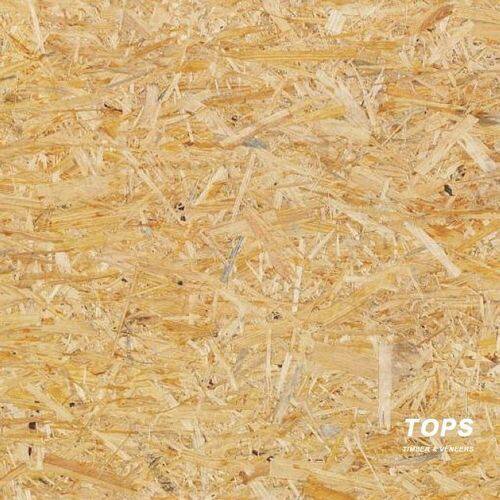
Oriented Strand Board OSB/LSB is a type of engineered wood similar to particle board, formed by adding adhesives and then compressing layers of wood strands (flakes) in specific orientations. OSB may have a rough and variegated surface, lying unevenly across each other, and is produced in a variety of types and thicknesses.
Advantages of Oriented Strand Board OSB/LSB
Strength And Durability
One of the main advantages of Oriented Strand Board OSB/LSB is its strength and durability, which makes it an ideal choice for structural applications such as flooring, wall sheathing, and roofing. Oriented Strand Board OSB/LSB is also more uniform and consistent in thickness and density than plywood or particleboard, which can improve the accuracy and efficiency of installation.
Natural Look
Another advantage of Oriented Strand Board OSB/LSB is its natural look, which can be enhanced with stain or paint to create a customised finish. Unlike some other materials that require veneers or laminates to achieve a certain aesthetic, Oriented Strand Board OSB/LSB can be a cost-effective and low-maintenance option for many design styles.
Environmentally Friendly
Moreover, Oriented Strand Board OSB/LSB is an environmentally friendly product that uses less formaldehyde than some other wood-based panel products. Formaldehyde is a volatile organic compound that can cause respiratory problems and other health issues, so using Oriented Strand Board OSB/LSB instead of materials with higher levels of formaldehyde can contribute to a safer indoor environment.
Soundproofing
Finally, Oriented Strand Board OSB/LSB has soundproofing properties that can help reduce noise transmission and enhance privacy in homes and buildings. By damping sound waves and preventing echoes, Oriented Strand Board OSB/LSB can create a quieter and more comfortable living or working space.
How To Choose Oriented Strand Board OSB/LSB
OSB1 - Has low moisture resistance compared to other boards, so it is only used in dry, non-production areas; OSB2 - The material is used to build load-bearing walls in dry conditions; OSB3 - The most common cladding and construction material. Resistant to load; has an optimal price to functionality ratio. The technical characteristics allow it to be used in rooms with high humidity; OSB4 - The most durable and expensive material. Its high durability allows the use of building structures and high loads in humid environment. OSB3 and OSB4 are not waterproof. Only the adhesive, which does not lose its properties when in contact with water, is water-resistant. The board must therefore be protected against direct contact with water; otherwise it will become saturated with water.
Vapour permeability, m (dry/wet) - the value of which can be written as 200/150. It is the relative conductivity coefficient between dry and wet. It only indicates how poorly the Oriented Strand Board OSB/LSB conducts vapour compared to air, as it is not only wood chips, but also a combination of wood and oils, which results in low vapour permeability.
The high density and the presence of fibres in the board ensures a firm hold. All types of fasteners and screws such as self-tapping screws, nails, dowels etc. can be used. The fasteners can be fixed at a distance of 10 mm from the edges. As a last resort, you can nail at a distance of 6 mm from the edges. A good quality paint can be used on oriented strand board.
One of the most controversial issues regarding Oriented Strand Board OSB/LSB is the material's toxicity and health hazards. The binder used in the manufacturing process contains melamine-formaldehyde and phenol-formaldehyde oils, which release formaldehyde when exposed to high temperatures. This is why it has been suggested that this material is more dangerous than particleboard and plywood. However, oriented strand board has a 3% adhesive and oil content while particleboard has a 12-14% adhesive and oil content.
Oriented Strand Board OSB/LSB is classified into three groups according to its formaldehyde content in Europe:E1 - up to 0.1 ppm, 0.125 mg/m3; E2 - 0.1 - 1.0 ppm, 0.125 - 1.25 mg/m³; E3 - 1.0 - 2.3 ppm, 1.25 - 2.87 mg/m³; Material with formaldehyde emission E1-E2 is approved for use in construction, while material with formaldehyde emission E3 is prohibited.
Applications of Oriented Strand Board OSB/LSB
Wall Sheathing
Oriented Strand Board OSB/LSB are popularly used as external sheathing on timber homes, much as plywood has historically been used. Oriented Strand Board OSB/LSB offer great strength and hold nails well. When looking to buy boards for external wall sheathing, it’s important to opt for the moisture resistance of OSB3 or OSB4.
Loft Boarding
Oriented Strand Board OSB/LSB can be used for loft boarding within a building, creating a boarded surface that can be used for storage or as a loft conversion. Oriented Strand Board OSB/LSB offer a high level of strength, which can be especially useful in a conversion, ensuring that the joists of your loft are protected and things like a bed and wardrobe can be held in place.
Flooring
Oriented Strand Board OSB/LSB can be used as flooring, typically sub-flooring covered with a more aesthetically suitable flooring product. The strength of Oriented Strand Board OSB/LSB makes them ideal for firm support in a heavy-traffic environment. If looking to install OSB as underflooring within a high moisture environment like a kitchen or bathroom, it’s important to choose a moisture-resistant model.
Roof Decking
Much like wall sheathing, Oriented Strand Board OSB/LSB can also be used to form the roof sheathing of a timber-framed home. The strength and moisture resistance offered by high-grade roofing boards make them a great alternative to plywood roofing, and they’ll also come at a lower price point.
Internal Wall Sheathing
Lower strength grades of Oriented Strand Board OSB/LSBcan also be a great way to give a consistent covering to an internal wall, which can then be decorated in a variety of ways. If looking to use internal wall sheathing within a humid environment then you will need to opt for a moisture-resistant model.
Furniture
While a lot of furniture can be made from weaker engineered woods like MDF, for items where strength is needed Oriented Strand Board OSB/LSB can be an excellent choice. This could be everything from chairs, tables, benches, or sturdy cabinets. Oriented Strand Board OSB/LSBfurniture will retain its unique look, which may not be to all tastes but can be painted if needed.
Manufacturing Process of Oriented Strand Board OSB/LSB
Wash And Debark
Oriented Strand Board OSB/LSB is manufactured from fast-growing, small trees. Short segments of the logs are washed and debarked prior to strand production by using disk or ring type flakers. Generally, strand size is approximately 0.5 inch by 3 inches by 0.02 inch depending on the type of process and raw material. Size of the strands can be modified based on target specifications of the panel.
Dried To 5 To 10 Percent Moisture
Since the moisture content of the strands ranges from 40 to 75 percent, they are dried to 5 to 10 percent moisture in large, rotating single-pass or triple-pass dryers with an inlet temperature of as high as 1,250oF.
Mixed With An Exterior Binder
Dried strands are classified into two sections using various sizes of screen. Larger strands are used for the face layers while the smaller strands are laid out in the core layer. Face and core layer strands are mixed separately with an exterior binder in a drum-type rotating blender. Depending on the process, a certain percentage of wax and other chemicals also can be applied during the blending process.
Phenol Formaldehyde (PF) and Diphenylmethane Diisocyanate (MDI)
In Oriented Strand Board OSB/LSB manufacturing, phenol formaldehyde (PF) and diphenylmethane diisocyanate (MDI) are two types of water-resistant resin commonly used as binder. Strands coated with one of these resins are ready for mat formation, which is the most important process determining properties of the panel.
Design Of Spinning Disks
A simple design of spinning disks is used in the forming of the strands. Face and core layers of the mat are oriented opposite each other and sequentially dropped on the conveyor belt. The mat thickness depends on the final thickness of the pressed panel and its density.
A Cross Saw Trims The Mat To The Desired Panel Length
In a general Oriented Strand Board OSB/LSB plant, forming lines are about 6- to 8-feet wide. The mat is carried toward the press and a cross saw trims the mat to the desired panel length. Individual mats are loaded into a multi-opening press having 10 to 20 openings depending on the plant’s capacity.
Give Stiffness To The Panel
A combination of pressure and temperature is applied to cure the resin and give stiffness to the panel. Typical press parameters include a temperature of 400 to 425oF and a pressure of 650 to 800 psi for approximately 4 to 6 minutes. Pressed panels are removed from the press line and conditioned on a rotating cooler prior to cutting them into desired dimensions.
Improve Their Surface Roughness
The panels are later sanded to improve their surface roughness. Certain processes, such as profiling with tongue and groove edges or the raised screen pattern on one face to eliminate slipping in roof application, can also be applied to the surface of the panels for special applications.
How to Protect Oriented Strand Board OSB/LSB from Water?
Some people opt for Oriented Strand Board OSB/LSB as an alternative, while others use it as a replacement for plywood. Whatever way you take it, Oriented Strand Board OSB/LSB is usually waterproofed during the manufacturing process. However, if you intend to use it for an exterior application, you may need to make it more resistant to water by adding a protective layer. We compiled this info on how to protect Oriented Strand Board OSB/LSB from rain.
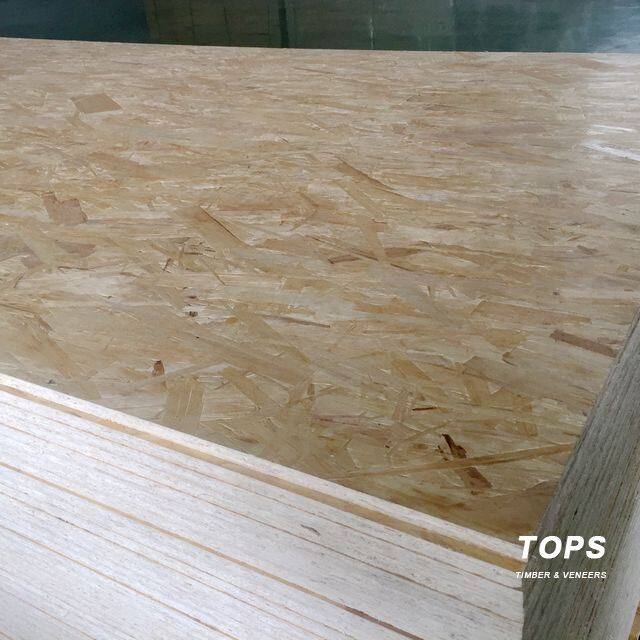
Step 1: Ensure Your Oriented Strand Board OSB/LSB Is Waterproofedc
Check whether your Oriented Strand Board OSB/LSB has that ‘waterproofed’ stamp on its surface. All Oriented Strand Board OSB/LSB are waterproofed to some extent, but knowing to what point will help you.
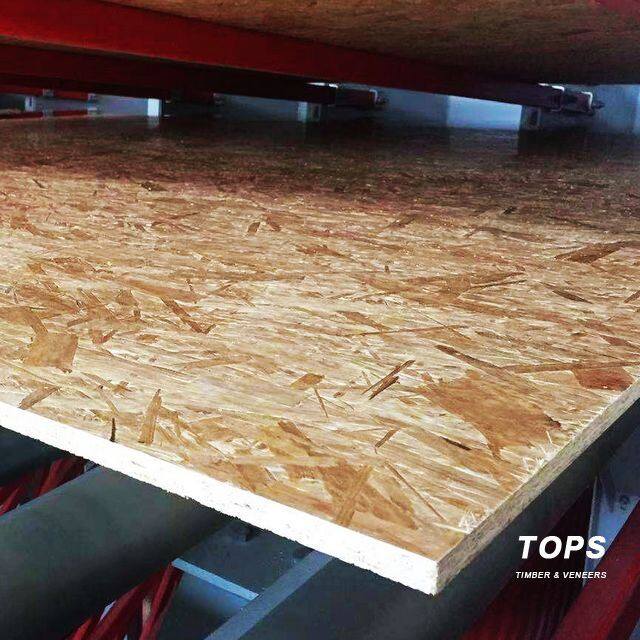
Step 2: Plan and Cut Pieces
Whenever you cut your Oriented Strand Board OSB/LSB, you will interfere with the edges, and any sealer will be lost, leaving spaces for water to enter. As such, you should cut beforehand the pieces you need before adding waterproofing to protect the edges. Measure, mark, and then cut the desired dimensions and set them aside.
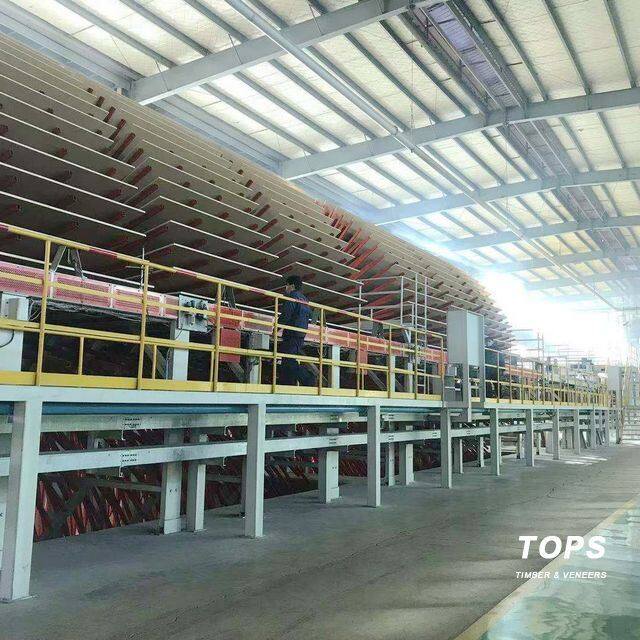
Step 3: Paint If Necessary
Exterior paint will not only make your Oriented Strand Board OSB/LSB attractive, but it also adds a layer of water resistance. So, the paint should be added before applying the waterproof so that the sealer can protect the topcoat. If you need a more natural appearance, you can stain your Oriented Strand Board OSB/LSB.
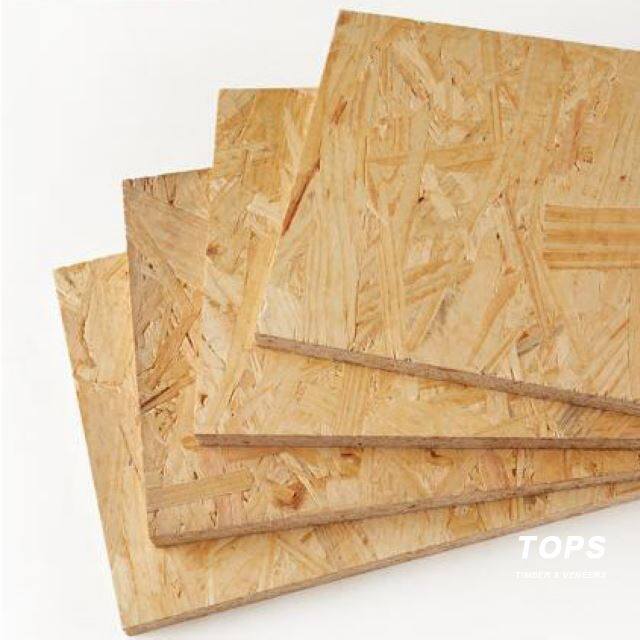
Step 4: Apply Waterproofing
You can buy a high-quality sealer from your home improvement store or local hardware. To apply, soak the tip of the paintbrush in the sealer and brush it over the Oriented Strand Board OSB/LSB’s ends and surface. Ensure this process is repeated on both sides, and not just the areas where you made cuts. Coat your Oriented Strand Board OSB/LSB pieces and allow the seal to dry for 12 to 14 hours. Now turn the wood and coat the remaining surfaces. If you need more layers of waterproofing for more protection, you can add them. Just allow each layer to dry for 12-14 hours before adding the next layer.
Step 5: Test
The last step on how to protect Oriented Strand Board OSB/LSB from water is testing to ensure you applied enough waterproofing on your Oriented Strand Board OSB/LSB. To test, pour some water on your waterproofed piece and allow it to sit on the surface for some hours. If it doesn’t soak the board after those hours, chances are your Oriented Strand Board OSB/LSB is well waterproofed. If not, you would need to add more layers and allow it to dry before testing again.
At The Yard
Keep Oriented Strand Board OSB/LSB under cover in a completely enclosed warehouse, if possible, but at minimum under roof cover. Store Oriented Strand Board OSB/LSB panels in a flat orientation. Keep side covers in place to protect the tongue-and-groove edges.
In Transit
Oriented Strand Board OSB/LSB transported on open flatbed trucks should be covered with a weatherproof tarp. Handle panels in a flat orientation. Protect edges and ends from damage and keep the load level. When moving Oriented Strand Board OSB/LSB with a forklift, stack on a bunk or a pallet and insert the forklift tines in between the supports, not into the panel or sheathing stack. Be sure to get the tines under the load to avoid spearing it and damaging it. Unload the pallet of Oriented Strand Board OSB/LSB all at once with a forklift; if the stack is unstrapped and the truck jerks forward, panels could fall and ends could be damaged.
At The Jobsite
Schedule shipments to ensure Oriented Strand Board OSB/LSB isn’t exposed to weather on site for long periods of time. Do not store panels in direct contact with the ground or mud. Store Oriented Strand Board OSB/LSB elevated on three 4x4s, one in the center and the others 12 inches from each end. This will keep the wood off the wet ground as well as allow for ventilation. For flooring panels, wait to remove cardboard side covers until ready to install to protect the tongue-and-groove edges. Minimize moisture exposure for Oriented Strand Board OSB/LSB panels and all wood framing in the home by getting the home roofed and wrapped in a timely manner.
Frequently Asked Questions
We're professional osb board manufacturers and suppliers in China, specialized in providing high quality products and service. We warmly welcome you to wholesale osb board made in China here from our factory.