


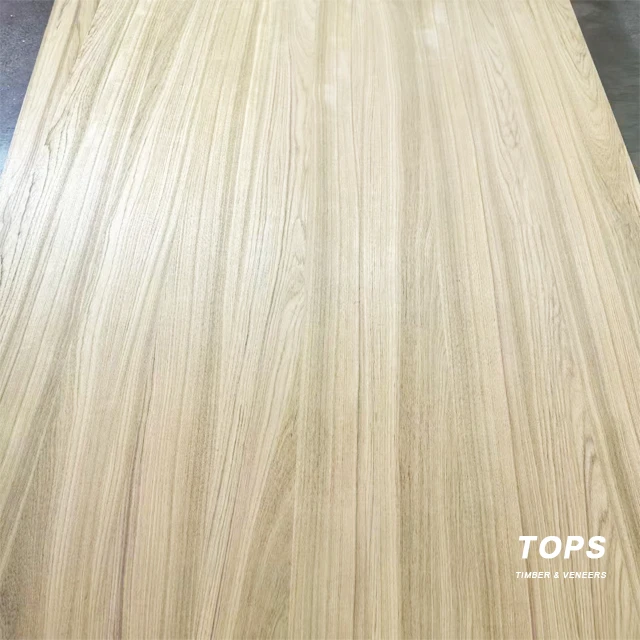
In the world of high-end custom cabinetry, luxury yacht interiors, and five-star hospitality millwork, Teak Wood Veneer remains an undisputed classic. Renowned for its warm golden-brown luster and unmatched natural durability, teak brings timeless elegance to any architectural space.
However, not all teak veneers are created equal. Depending on the origin, teak veneers vary significantly in oil content, grain structure, and price point. In this guide, we will explore the core characteristics of teak wood veneer and rank the three primary market grades-Burmese Teak, South American Teak, and African Teak-from highest to lowest tier to help you source the right material for your project.
1. Why Architects & Designers Love Teak Wood Veneer
Often referred to as the "King of Woods," genuine teak (Tectona grandis) retains its remarkable structural and aesthetic properties even when sliced into thin architectural veneers:
Rich Natural Oils & Moisture Resistance: Teak is packed with natural oils and rubber compounds. This gives the veneer a smooth, silky touch while making it naturally water-resistant, decay-proof, and impervious to pests-ideal for coastal properties, dry bathroom vanities, and marine interiors.
Exceptional Dimensional Stability: With an ultra-low shrinkage ratio, teak veneer resists warping, cracking, and splitting when exposed to fluctuations in humidity and temperature.
The "Sun-Tanning" Color Evolution: Freshly veneered teak often exhibits slightly muted tones or subtle greenish streaks. Over time, exposure to oxygen and natural light transforms the surface into a rich, uniform golden-brown patina that grows more lustrous with age.
Distinctive Mineral Streaks: Authentic teak features fine dark mineral lines ("black stripes") and organic oil shadows that give every sheet a unique, luxurious character.
2. Teak Veneer Grades Ranked: High to Low Tier
In international timber and veneer trading, teak veneers are generally categorized into three quality and price tiers based on their origin and botanical properties:
Tier 1 (Ultra-Luxury): Burmese Teak Veneer
Sourced from old-growth, naturally grown forests in Myanmar, Burmese Teak is the gold standard of authentic Tectona grandis. Due to strict export regulations and limited supply, genuine Burmese teak veneer is rare and commands a luxury price point.
Grain & Color: Features tight, straight, and exceptionally uniform grain (available in both Quarter-Cut straight grain and Crown-Cut cathedral grain). The color is a deep, rich golden-honey to warm brown, accented by signature fine black mineral streaks and rich oil shadows.
Material Properties: Boasts the highest natural oil content and density. Even with minimal finishing, it sands to a satin-like sheen and offers superior weather and rot resistance.
Best Applications: Ultra-luxury private residences, superyacht and cruise ship interiors, bespoke heirloom furniture, and flagship VIP lounges.
Tier 2 (Mid-to-High Tier): South American Teak Veneer
South American Teak refers to plantation-grown Tectona grandis cultivated in countries like Brazil, Ecuador, and Costa Rica. While botanically identical to Burmese teak, the faster growth rate in managed plantations alters its visual and physical characteristics.
Grain & Color: Because plantation trees grow faster, the annual growth rings are wider, resulting in bolder, wider cathedral patterns and slightly coarser grain. The tone is generally lighter (pale yellow to light golden brown) with fewer black mineral lines, higher color variation between sheets, and occasional small pin knots.
Material Properties: Contains slightly less natural oil than wild Burmese teak, yet still provides reliable stability and durability. It accepts stains and clear coats very well, making it easy to color-match across large panels.
Best Applications: Upscale hotel guestrooms, boutique commercial spaces, residential wall paneling, and custom kitchen cabinetry. It is the best cost-effective alternative when Burmese teak exceeds the project budget.
Tier 3 (Value & Commercial Grade): African Teak Veneer
Botanically speaking, true teak (Tectona grandis) is not native to Africa. In the commercial veneer market, "African Teak" is a trade name commonly used for look-alike African hardwoods-most notably Afrormosia (Pericopsis elata) and Iroko (Milicia excelsa).
Grain & Color: Ranges from yellowish-brown to deep russet brown with a pleasant natural sheen. The grain is often interlocked or ribbon-striped with slightly larger pores, and it lacks the signature black mineral streaks of Asian teak, offering a cleaner, more contemporary look.
Material Properties: Very hard, dense, and wear-resistant, with good natural durability. However, it lacks the high natural oiliness of true teak, meaning the wood feels drier and requires sharp tooling during processing to prevent chipping.
Best Applications: Large-scale commercial developments, chain hotels, modern office furniture, interior architectural doors, and minimalist residential projects where budget efficiency and consistent supply are top priorities.
3. Quick Comparison: Burmese vs. South American vs. African Teak
| Feature | Burmese Teak (Tier 1) | South American Teak (Tier 2) | African Teak (Tier 3) |
| Market Positioning | Ultra-Luxury / Collector Grade | Mid-to-High / Accessible Luxury | Commercial / High-Value Grade |
| Botanical Origin | Wild old-growth Tectona grandis | Plantation Tectona grandis | Teak-like hardwoods (e.g., Afrormosia, Iroko) |
| Color Tone | Deep golden-brown; evens out beautifully | Pale yellow to light brown; higher variation | Yellow-brown to dark warm brown |
| Grain & Figure | Fine, tight grain with distinct black streaks | Wider growth rings, bold cathedral grain | Interlocked/ribbon grain; no black streaks |
| Oil Content & Feel | Very high; silky, oily touch | Moderate; good stability and workability |
Low; drier, harder surface texture
|
4. Frequently Asked Questions (Q&A)
Q1: Why does my newly applied teak veneer look slightly greenish or uneven in color?
A: This is completely normal and actually a sign of authentic teak (Tectona grandis). Freshly sliced teak contains natural oils and pigments that appear greenish or blotchy before oxidation. Simply expose the raw panels to indirect natural light and air for a few days prior to applying a clear topcoat-the color will naturally oxidize into a rich, uniform golden brown.
Q2: Which cut should I choose: Quarter-Cut (Straight Grain) or Crown-Cut (Flat/Cathedral Grain)?
A: Quarter-cut teak veneer produces clean, linear stripes that are ideal for modern, minimalist, or contemporary architectural millwork. Crown-cut teak veneer showcases dramatic, flame-like cathedral arches, making it better suited for classic interiors, feature walls, and statement furniture pieces.
Q3: Does the high oil content in Burmese teak affect gluing and finishing?
A: Yes. Because Tier 1 Burmese teak is rich in natural oils, standard wood glues and finishes may experience adhesion issues over time. We recommend wiping the veneer surface with acetone or an oil-removing solvent just before bonding and finishing, and using high-performance polyurethane (PUR) adhesives alongside a dewaxed shellac or barrier sealer before applying lacquer.
Q4: Can African teak veneer be used in humid environments like bathrooms?
A: While African teak (such as Iroko or Afrormosia) has good natural rot resistance, it has lower oil content than genuine Burmese or South American teak. It works well in standard indoor spaces and dry vanity areas, provided all edges and surfaces are properly sealed with a moisture-resistant marine or polyurethane finish.
Q5: What veneer thicknesses and panel substrates do you offer?
A: Our architectural natural teak veneers are precision-sliced to standard thicknesses ranging from 0.5mm to 0.6mm (1/42" to 1/50"), ideal for custom pressing onto plywood, MDF, or particleboard cores. We supply both raw sliced veneer sheets and pre-laminated architectural panels tailored to your project dimensions.


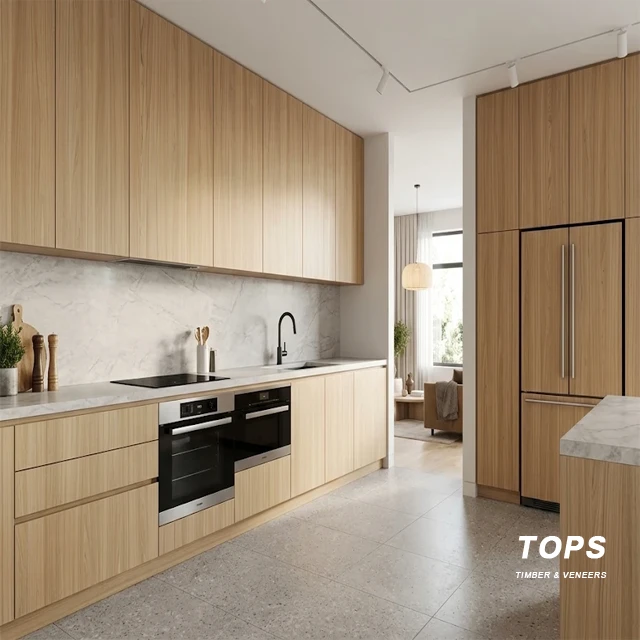
Whether your design calls for rare Old-Growth Burmese Teak, South American Teak, or cost-effective African Teak, our team supplies custom-spliced veneer sheets, matching edge banding, and CARB-certified teak-veneered plywood engineered to meet strict ultra-low formaldehyde emission standards. Contact our wood specialists today to request physical sample swatches and a customized project quote!


