LVL is Replacing Solid Wood in Modern Formwork & Scaffolding
When it comes to modern structural engineering and sustainable architecture, traditional solid wood is no longer the only-or even the best-choice. As builders and designers seek materials that offer both eco-friendly credentials and uncompromising strength, Laminated Veneer Lumber (LVL) has emerged as a game-changer.


The Engineering Secret: Parallel Grain Alignment:
LVL can't totally regarded as plywood, they serve entirely different structural purposes due to their grain orientation:
Plywood: Uses cross-grained lamination (layers are placed at 90-degree angles to each other) for multi-directional panel strength.
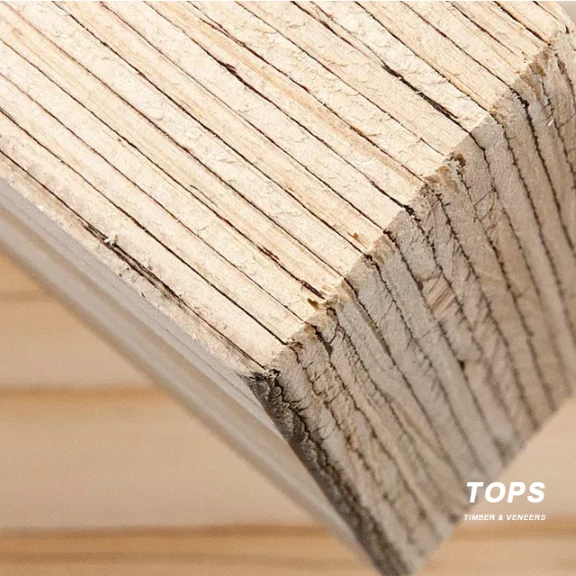
LVL: Uses parallel grain lamination. Every single veneer layer is aligned so that the wood grain runs longitudinally in the same direction. This parallel alignment gives LVL an incredible load-bearing capacity and tensile strength along its length, mirroring the structural performance of steel or concrete.
Key Characteristics and Benefits of Premium LVL
--High Strength-to-Weight Ratio: LVL delivers exceptional bending strength and stiffness. Pound for pound, it is stronger than traditional solid timber and significantly lighter than structural steel, making it easier to handle on-site without heavy cranes.
--Flawless Dimensional Stability: Unlike natural logs that twist, cup, split, or shrink due to changing moisture levels, LVL is highly predictable. The kiln-drying and high-pressure manufacturing process ensure that the finished beams remain perfectly straight and true over decades.
--Elimination of Natural Defects: Natural timber contains unpredictable weak points like knots, rot, or grain deviations. During the LVL production process, these natural defects are cut out or scattered randomly across the layers, effectively neutralizing their impact on the overall structural integrity.
--Design Flexibility: Because it is built up layer by layer, LVL can be customized into ultra-long spans, thick dimensions, and specific shapes that are impossible to source from natural old-growth trees.
Practical Applications of LVL in Construction:
LVL is incredibly versatile and serves as the invisible backbone in various commercial, residential, and industrial applications:
--Structural Framing (Beams & Headers)
Due to its heavy load-bearing capability, LVL is widely used for structural beams, lintels, purlins, and headers over large door and window openings where immense structural support is required.
--Floor and Roof Joists
LVL provides the flat, rigid support needed for floor joists and roof truss components, reducing floor squeaks and ensuring perfectly level rooflines in modern wood-frame houses.
--Premium Door Substrates & Framework
In high-end door manufacturing (especially premium oversized doors and specialized fire-rated doors), high-density LVL is utilized for internal stiles, rails, and core framing. It provides an unyielding, warp-resistant core that ensures the door remains perfectly balanced despite temperature fluctuations.
--Formwork & Scaffolding Planks
Because of its reliable breaking strength, specific grades of LVL are chemically treated and engineered as premium scaffolding planks and concrete formwork support on construction sites, guaranteeing worker safety.
Key Global Markets: Where is LVL Used Most?.
The demand for LVL is heavily concentrated in regions with mature wood-frame construction industries and strict building safety compliance:
--Australia & New Zealand (Oceania): This is one of the most prominent markets for structural LVL. Residential construction in Australia and New Zealand relies heavily on timber framing systems, where LVL beams are standard specifications for residential extensions and commercial timber builds.
--North America (USA & Canada): Known as the pioneers of light-frame wood construction, North American builders utilize massive quantities of LVL for residential housing developments, massive warehouses, and multi-family residential structures.
--Europe (Nordic Countries, Germany, UK): With European regulations heavily pushing for carbon-neutral building materials, European architects favor premium LVL for mass-timber projects and eco-luxury custom architectures.
Understanding International Compliances and Standards
To export or specify LVL in international projects, the material must pass rigorous physical and mechanical testing to receive certification. The standards vary depending on your target market:
-- Australia & New Zealand Standard: AS/NZS 4357
For the Oceanian market, structural LVL must comply with AS/NZS 4357 (Structural Laminated Veneer Lumber).
This standard dictates the structural properties, sampling methods, and characteristic values.
LVL stiffness under this standard is classified by its E-Value (e.g., E11, E13, E15). Higher E-values mean greater stiffness and load capacity, heavily requested by Australian structural engineers.
--North American Standards: ASTM D5456 & CSA O122
ASTM D5456: The standard specification for evaluation of structural composite lumber products in the United States.
CSA O122: The Canadian standard governing the manufacturing and quality control of structural glued-laminated timber.
🇪🇺 European Standard: EN 14374
In the European Union, structural LVL must bear the CE mark and comply with EN 14374, which specifies the requirements for testing, evaluation of conformity, and marking of laminated veneer lumber for structural use.
🌱 Global Environmental Standard: FSC Certification
Beyond structural performance, international buyers demand supply chain ethics. Having FSC (Forest Stewardship Council) certification ensures that the veneers used in the LVL are sourced from responsibly managed, sustainable fast-growing plantations, fulfilling the requirements for green building certifications worldwide.