


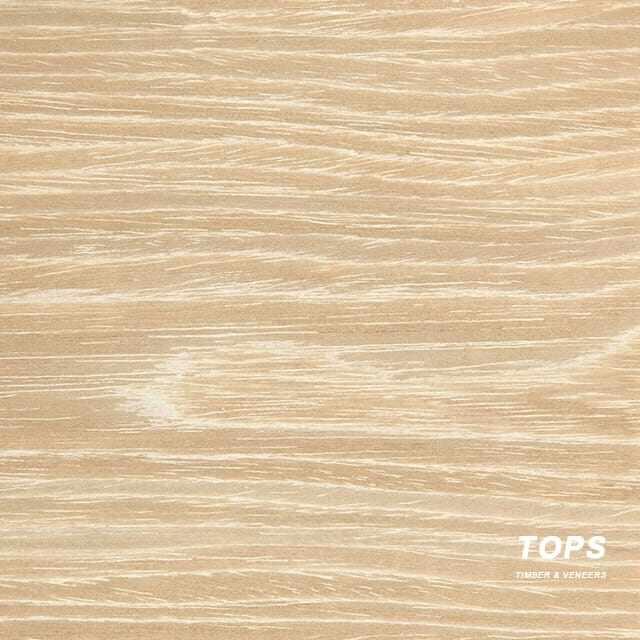


What is Recon White Oak Veneer?
Reconstituted rift cut white oak veneer, also known as engineered rift white oak wood veneer or manmade rift sawn white oak veneer is typically a wheat colored beige or a light tan brown color.
Reconstituted white oak wood veneer is made from dyed and laminated layers of a fast growing secondary species of wood, with the grain running along the 8' dimension. Rift cut reconstituted white oak veneer normally is not graded because it is manmade and has no defects. Rift engineered white oak wood veneer boasts a straight uniformly colored grain pattern with a smooth texture. Reconstituted rift cut white oak veneer is ideal for projects that require a large number of consistent sheets. Man made white oak wood veneer accepts finishes well.


Specification
| Materials | Poplar/Ayous/Basswood |
| Thickness | 0.2-2.0mm |
| Size | 640x2500mm |
| Moisture | 8-12% |
| Packing | Plywood pallet free of fumigation |
| MOQ | 2000 sheets |
| Leading Time | 2 weeks |
Features of Recon White Oak Veneer
Other Names: Rift White Oak, Rift Cut White Oak, Rift Sawn White Oak, American White Oak
Similar to: Quartered White Oak, Quarter Cut White Oak, Quarter Sawn White Oak, Japanese Oak, Rift Red Oak
Color: Light beige to medium brown. Finishes to a rich honey tone.
Sustainability: Plentiful
Grain/Texture: Rift White Oak exhibits either a straight grain or a mildly curved grain. Its grain is narrower than Red Rift Oak. This veneer often has a combed grain appearance. While Rift White Oak is similar to Quarter Sawn White Oak, Quarter Sawn White Oak is more likely to get a flakey grain, which may be desirable for certain woodworking projects.
Benefits of Recon White Oak Veneer
Better physical-mechanical function
The recombination of raw wood veneers gives a better structure for the reconstituted veneers.
So that has no defects as natural wood veneer.
Such as knots, discoloration, wrinkled wood veneer sheets problems.
It is easy to make plywood or MDF veneering for veneer furniture or interior veneer doors.
2ft x 8ft or 4ft x 8ft sheet size
Max Length 3400mm per sheet.
Max Width 1260mm per sheet.
It can be sliced from 0.15mm to 2.5mm thick veneer.
You can imagine how simple to use it compared to the narrow real natural veneers.
You do not need to cut and splice every different bundle, like natural veneers.
And you also have no waste of materials. You can use almost every part of the materials.
We can produce reconstituted veneer sheets or rolls at your request.
With the new ultra-wide finger joint veneer machine, you can get joint Max 640mm width wood veneers to any length.
Environmentally friendly
Over the years, the R&D input on the environment-friendly glue and dyestuff gives us an amazing result.
That makes the best grade of recon veneers can reach E0 formaldehyde emission ratings.
Even the common standard veneers, which also reach E1 grade.
Consistent color and grain from sheet to sheet
As we all know, there is too much variation of grains and colors for natural wood veneers.
So that you have to cut a few bundles of veneer sheets to get the consistent linear grain and color.
But the reconstituted veneers are good at the consistent wood grains and colors.
Every sheet of recon veneer keeps the consistent color and grain.
You do not need to cut and matching them, you will have no waste of materials.
Even though bigger joinery projects, need one uniform color, the reconstituted veneer is your best option.
Available in a variety of colors and grains
There are a lot of wood species designs available in reconstituted veneers.
As for common standard wood species, you can find white oak, red oak, ash, walnut, gray, teak, zebrawood, cherry, maple, wenge, Sapele, elm, etc.
There are many specialty and exotic veneers designs. Such as reconstituted ebony veneer, rosewood, mahogany, cat`s eye, bird`s eye maple, lacewood, white ice tree, burlwood, end grain veneer, etc.
Higher density
Because of the strict quality control in the reconstituted wood blocks production processes and the good quality raw wood veneer sheets we chose.
We produce a higher density wood block always.
So that our sliced recon wood veneers are much smoother than the cheaper one.
Even some natural wood veneers, the surface is not smooth like ours.
Additionally, fleece backed veneer has a better surface evenness than raw veneers. Our clients do not need to sand it when veneering on plywood or MDF.
So that our clients can save more painting by using our high-density reconstituted veneer.
How Are Reconstituted Veneers Made?
Leading engineered veneer manufacturers make reconstituted veneers from faster-growing wood species, such as poplar, African whitewood (also known as ayous or obeche), or koto logs. They are sliced like any other veneers but the sheets are dyed using water-based or solvent-based dyes to achieve the expected color. Next, bundles of dyed veneers are pressed into blocks with a little bit of resin. A slicing machine then slices the block into amazingly realistic wood patterns, imitating real wood veneers. The major advantage of reconstituted veneers is the consistency in color and grain, and the absence of natural defects.
Reconstituted (engineered) veneer provides a level of visual consistency you will not find in pure wood veneers. The reconstituted veneer is free of knots and natural imperfections. In appearance it will appear as a rift cut, showing consistent lines across a wide area. While natural veneer will show knots and will change appearance with every sheet (raw European White Oak veneer sheets are between 100-400 mm wide), the reconstituted veneer will appear pretty much consistent. If you were a top Italian furniture maker, visually consistent veneer would be your go-to choice.
You may ask, is engineered wood veneer 100% wood? The answer is no, but wood represents the majority of the finished veneer. For example, the average weight composition for ALPIlignum, a decorative multilaminar wood veneer collection with 32 wood types, looks as follows: 70-80% of poplar wood (and/or ayous wood, and/or basswood), 16-20% resins, <1% dyes, and min 4%-max 14% moisture content.
4 Main Types of Oak Veneer
Reconstituted Oak Veneer
Why you should choose the reconstituted oak veneer?
Because you can get a full sheet veneer in 2×8 ft or 4×8 ft panel size, with consistent color and grain from sheet to sheet.
And you can also choose dozens of different colors and grains. Such as grey oak, white oak, red oak, silver fineline oak, yellow oak, black oak, smoked oak, and washed platinum oak.
At the same time, you can choose any thickness you want. For example, paper thin 0.2mm with fleece backed veneer, 0.3mm, standard 0.4mm and 0.5mm thickness recon oak. Even some extra thick veneer in 1mm or 2mm also is available.
When it comes to wood grains, you will have more options. For example, straight fineline oak grain, quarter oak grain, rift cut oak grain, flamed (crown/flat cut) oak grain, planked (half crown) oak grain, wavy oak grain, and other special grain designs.
Natural Oak Veneer
Natural oak wood veneer is the best-selling natural wood veneer in the world.
No matter natural oak wood sheets, veneer rolls, or matched oak layons, oak wood is in huge demand.
American white oak, Red oak, and European oak are the 3 main types of common oak wood species.
For special thickness, you can choose 0.25mm fleece backed oak sheets, paper backed oak sheets, 1.0mm and 2.0mm thick oak sheets.
When it comes to cut grains, there are quarter cut straight line, rift cut oak, flat cut crown grain oak, rough sawn cut oak sheets, and cross cut end grain oak round pieces.
Sure, there are many options for dyed oak veneer, fumed dark brown color oak sheets.
Oak Veneer Rolls
There are two main applications of oak wood veneer rolls.
One is veneer edge banding in width from 15mm to 60mm, another is wrapping veneer in width from 60mm to 300mm. Besides, you can get extra width of 620mm wood veneer rolls.
Of course, you can choose to use either natural oak or reconstituted oak for raw materials of rolls.
When it comes to oak edge banding, we provide UV prefinished coating service. That means you can get UV clear lacquer oak edge banding and stained color oak edge banding.
For profile wrapping, we suggest 0.25mm thickness oak wrapping veneer rolls. Because the thin veneer is flexible and durable with fleece backed.
Matched Oak Veneer
There are 7 main types of matched methods to splice oak wood veneer panel sheets.
Book matched and Slip matched oak are the two most popular matching veneer methods in furniture, door, and wall covering application.
Sure, Cross grain oak layons are becoming more and more popular in interior door designs.
The rest are random matched oak, diamond matched oak, reverse matched oak panel sheets.
You can choose to use American white oak, red oak, European oak, smoked oak, dyed oak, grey oak, or rustic knotty oak.
Matched oak panel sheets are easy to press on the plywood or MDF.
So that will save more your money and times to produce veneered door and furniture.
Quality Guarantee
- Professional production for nearly 20 years
- Scientific management in quality control
- Strict selection of raw materials, grading, and inspection


