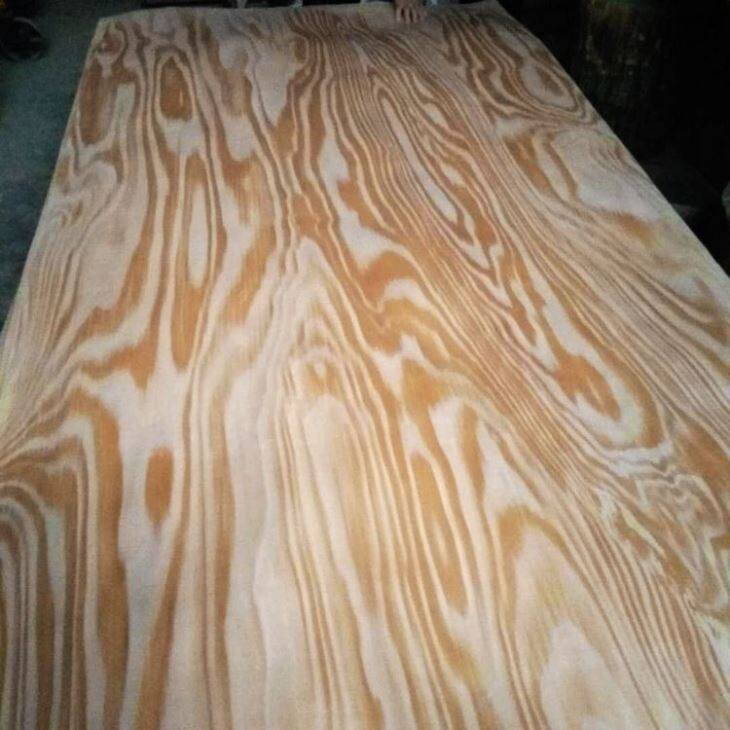
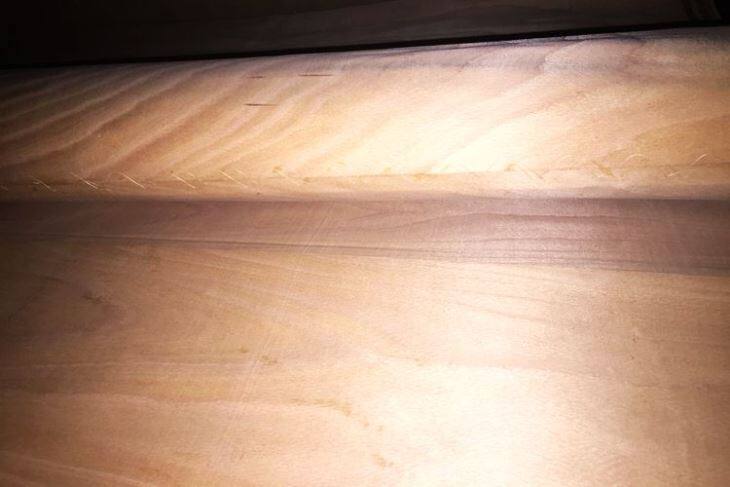
Beech is one of the hardest wood species for rotary cut. The drying process is very key to the veneer quality. It’s normally available at 4'x8', applied in paneling production.
Send Inquiry
Description
Technical Parameters
Overview of Rotary Cut Beech Veneer
Rotary-cut beech veneer is a slice material of a given format and thickness, which is used to make plywood. Beech is one of the hardest wood species for rotary cut. Beech veneer is durable, it has a good structure and it is perfectly machined. The drying process is very key to the veneer quality. It's normally available at 4'x8', applied in paneling production.
Rotary cut veneer
Type: natural veneer
Thickness: 1.0 mm – 2.2 mm
Moisture: 4-8%
Width: 150mm – 2600mm
Length: 400mm – 3000mm
Quality: A/B/C, KD <10%, steamed and unsteamed, edged and unedged
Cut: Quarter Cut, Rift Cut
Color: Pale pink to a creamy reddish light brown
Characteristics: Strong, with a fine silky texture and tight uniform grain
Wood Type: A hardwood that is hard and dense but relatively easy to work with
Properties of Beech Veneer
Beech wood is medium to heavyweight. It is very hard and tough. It has good strength properties and high abrasion resistance.
Beech can shrink considerably and is subject to movement more than other woods. It should not be subject to moisture fluctuations before or during working.
Advantages of Beech wood in the Furniture Manufacturing Industry
Flexible
Beech wood is usually used for manufacturing curved furniture, as it's easily malleable, making it a great candidate for almost everything – chairs, cabinets, flooring, spoons, cutting boards, and even goblets. It is very easy to work with beech wood for industry precisely for these purposes.
Durable
Belonging to the category of "hard-wearing" wood, beech hardwood is non-porous, has a solid density and a strong surface. This means, it will last against pressure, chipping, and gouging, more than some other varieties of wood.
Shock-absorbent
The evenly textured, straight-grained beech wood offers significant resistance to pressure, because of being hard, heavy, and strong. Keeping this in mind, beech wood is usually preferred for floorings, as in can bear weight and high-impact force.
Affordable
Beech wood comes at the same price-point as other lower cost hardwoods. Not only this, it is quite often used to mimic expensive woods like Mahogany, Maple, Walnut, and Cherry.
Easy Maintenance
Lightly steamed beech lumber is often used to highlight the natural grain, finish, and color uniformity of the wood. Since it has long-lasting properties, beech wood furniture will stand the test of time, and look good even years later. In an event of severe cosmetic damage, simply sanding down the edges can do the trick.
Process technology of Rotary Cut Beech Veneer
1. We select the highest quality wood for the production of top quality veneers. All round wood intended for the production of rotary-cut veneers has a minimum of external and internal defects, has a low knot frequency, which leads to a higher yield of high quality veneers.
2. We steam the beech logs by placing them in hot water pools before starting the peeling operation. This process increases the plasticity of the wood and knots, provides easy peeling of the log and causes greater smoothness and density of veneer.
3. In the production of veneer we use modern peeling machines, with spindle lock mechanism for fixing the log. The peeling stage itself is a process in which simultaneously with the rotation of the timber, the cutting blade moves in the direction of the center of rotation, which leads to a cut of the wood layer of the required thickness (veneer sheets).
4. After peeling, we send the veneer to the dryers. Drying prevents the appearance of mold and other defects, removes excess moisture and prepares the veneer for glue application and product manufacturing. We use conveyor-type roller dryers. With this system, the veneer passes through several chambers, through which hot air flows. The temperature and speed of the conveyor are controlled to ensure that the veneer leaves the dryer with the required moisture content and quality. The target humidity range is 6 - 10 %.
5. After drying, we carefully sort the veneer sheets according to customer requirements and the purpose of the product. The quality criteria include natural wood characteristics or process-derived defects arising from peeling or veneer processing. Veneer quality grading is divided into four varieties: A, B, C and D, where the best veneer class is "A" and the following varieties are lower quality veneers.
The Scope Of Use Of Beech Veneer
It is suitable for surface veneering of classical furniture and solid wood composite doors;
It is mostly used for interior decoration of high-end star hotels, restaurants, high-end entertainment clubs, villas, etc.;
It can be used for interior decoration of cars and luxury yachts;
It can be used for surface finishing of pianos, violins, high-end speakers and other musical instruments.
It can be used for other wood products and handicraft surface veneer.
FAQ
Q: 1.What is rotary cut veneer?
A: Rotary Cut veneer is produced by rotating a log while shaving a full-length continuous sheet. This process is the only cutting method that produces whole-piece face veneers. A Rotary Cut will yield veneer with a broad grain pattern with no plain sliced or quartered appearance.
Q: 2.What is the rotary method of making veneer?
A: In rotary slicing, a whole round log is mounted on a lathe and turned against a blade. Rotary cutting or "peeling" of a log produces a continuous sheet of veneer as if the tree were being "unrolled". This is the most economical method of cutting.
Q: 3.What are the three types of veneer cuts?
A: There are four main categories of plywood veneer cuts, namely Rotary Cut, Plain Sliced, Rift Cut and Quarter Sliced. The way the log is cut will change the appearance of the grain of the ply, creating different patterns.
Q: 4.What is the rotary cut method?
A: A whole log is mounted in the center of the lathe and turned against a sharp blade, much like unwinding a roll of paper. It is the most economical method of cutting. Rotary cut veneer can be wide enough to produce a full-sheet, or single piece faces.
Q: 5.What is rotational veneer production?
A: Rotary slicing is the most impressive method. The tree trunk cut into quarters rotates around its own axis against a fixed knife. Each turn produces a sheet of veneer. For vertical or horizontal slicing, the logs are firmly held, by suction or with claws, on a moving table that moves up and down or from right to left.
Q: 6.How many methods of cutting veneer are there?
A: There are 3 common ways to cut the top layer: Sawn, Sliced and Rotary-peeled. The method used plays a factor in the aesthetics or appearance of the veneer and has its own set of features and benefits.
Q: 7.Why is beech used for furniture?
A: Durable. Belonging to the category of "hard-wearing" wood, beech hardwood is non-porous, has a solid density and a strong surface. This means, it will last against pressure, chipping, and gouging, more than some other varieties of wood.
Q: 8.What are the applications of beech wood?
A: Beech wood is primarily used in the manufacturing of furniture and furnishings, veneers, plywood, stairs, and parquet. It is also used for toys, kitchen utensils and textile fibers for the production of cellulose.
Q: 9.What are the practical applications of veneer?
A: Wood veneers can be used on floors, walls, ceilings, furniture, casework, and more to project a sense of opulence and fine craftsmanship.
Q: 10. What are the best uses for beech?
A: American Beech has a reputation for working very well when used for chair legs and backs. This also makes it a popular choice for use in cabinets, flooring, and even mouldings & trim.
Q: 11.What is beech veneer?
A: A favorite in modern interiors, beech is a straight grained wood with a very fine, even texture. While beech is naturally a creamy, almost white color, most beech is steamed, producing a consistent slightly pink hue in veneer.
Q: 12.What is beech wood used for in construction?
A: Some common uses of beech wood include constructing bed frames, living room furniture, cabinetry, and many other structures. Because of its hardness, it is also used for making utensils, musical instruments, sports equipment, flooring, and plywood.
Q: 13.What are veneer wood used for?
A: Veneer refers to the thin slices of wood that is glued onto panels, such as wood, particle board, or medium-density fibre board. Veneers are usually thinner than 3mm in thickness and give great finishes to doors, tops, panels for cabinets, parquet floors and parts of furniture.
Q: 14.Is beech used in furniture?
A: Beech wood is a fine-grained wood that has a light orange to salmon colour. Furniture makers love its distinct pore pattern. The wood is often used in making lower end solid wood furniture such as wishbone chairs and stools, just to name a few.
Q: 15.Why is beech used in tools?
A: Beech is very hard and tough. It is also strong, with a close straight grain. Beech polishes well and withstands shocks and wear. beech is often used in the making of furniture, cabinetry, cooking utensils, tool handles, plywood and sports equipment.
Q: 16.What is beechwood material?
A: Beech is a very hard wood type and the hardest wood type in the Carl Hansen & Søn range. Beechwood has a very homogeneous surface, structure and hardness, which means that the wood does not absorb the paint when surface-treated, but the paint is distributed neatly and evenly on the surface.
Q: 17.What is the difference between beech and birch?
A: Birch has a creamy yellow tone while beech is more pink or amber. Birch is around 25% softer than oak, while beech has about the same hardness as oak. Beech costs less than birch but is more prone to denting. Birch is highly scratch and shock resistant.
Q: 18.What is the function of beech wood?
A: Beech wood has a variety of uses, as a veneer, for the production of plywood and furniture, as well as in internal design, for doors, etc. As a solid wood it is also used internally in staircases and frequently, due to its extreme hardness, parquet floors.
Q: 19.What are the main properties of beech?
A: Beech is a hard wood, moderately heavy and solid, with good mechanical properties. It has particularly high resistance to compression, though less so to bending or tension because of its short fibres. Very fine texture. It has a tendency to warp substantially when exposed to changes in humidity.
Q: 20.What is the color of beech wood?
A: Normally, there is no clear distinction in colour between sapwood and heartwood. The wood is very pale brown when freshly cut, turning reddish-brown under the influence of steaming treatment commonly applied in parts of the continent. Some logs show an irregular, dark reddish-coloured heart.