


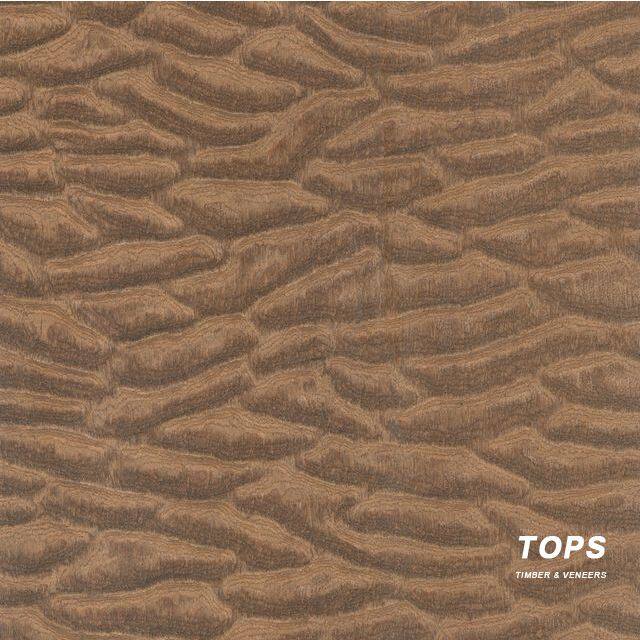
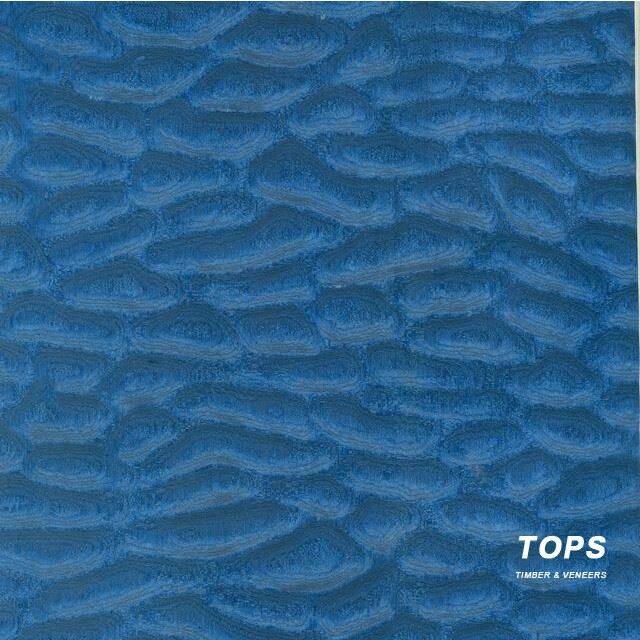
Specification
|
Materials |
Poplar/Ayous/Basswood |
|
Thickness |
0.2-2.0mm |
|
Size |
640x2500mm |
|
Moisture |
8-12% |
|
Packing |
Plywood pallet free of fumigation |
|
MOQ |
2000 sheets |
|
Leading Time |
2 weeks |


What is 3D Reconstituted Tree Grain Veneer
3D Reconstituted Tree Grain Veneer is an innovative material created using advanced 3D techniques and printing-dyeing processes. Is an environmentally friendly alternative to expensive rare and exotic wood species. Reconstituted wood veneer is created with consistency using real wood from natural, renewable sources. It mimics your favorite wood veneer species and is free from natural defects.It is designed to replicate the appearance and texture of real trees. By employing high-precision scanning and modeling techniques, tree surface texture, color, and intricate details are faithfully reproduced on the veneer's surface.
Advantage of 3D Reconstituted Tree Grain Veneer
It can simulate the textures of various tree species such as oak, walnut, cherry, and different styles like rough, smooth, or matte finishes. Utilizing printing-dyeing methods, varying depth of texture, color variations, and pattern effects can be achieved.
3D Reconstituted Tree Grain Veneer presents several advantages. Firstly, it allows the replication of tree appearances without the need for tree felling, making it environmentally friendly. Secondly, it ensures consistency and reproducibility, guaranteeing a uniform appearance across products and spaces. Compared to genuine wood, this engineered veneer exhibits enhanced durability and easy maintenance, reducing upkeep costs.
In summary, 3D Reconstituted Tree Grain Veneer is an engineered material produced using advanced 3D techniques and printing-dyeing processes to emulate the texture and appearance of trees. It provides a sustainable, visually appealing, diverse choice for furniture, architecture, and interior design. It holds promise for environmental conservation and value enhancement, offering innovative possibilities for designers and consumers.
Applications 3D Reconstituted Tree Grain Veneer
1. Wall Panels: 3D Reconstituted Tree Grain Veneer can be used on walls panels to increase their aesthetic appeal. Reconstructed from different species of wood, Reconstituted Veneer sheets provide consistency in grain and color. Besides being available in a wide range of design, color and texture, Reconstituted Veneer is also remarkably durable and moisture resistant, which makes it an ideal choice for wood panels.
2. Ceilings and Walls: 3D Reconstituted Tree Grain Veneer sheets are the future of environmentally green, high-end veneer core. Ceilings and walls adorned with Reconstituted Veneer sheets help customize the interiors of your property to fit the style and decor. Whether you want a minimalistic or luxurious ambience, wood veneers can help you manifest your vision to perfection.
3. Furniture: Chairs, tables, dressers and other furniture pieces can be easily given a new and unique appeal with 3D Reconstituted Tree Grain Veneer. You can take your pick from a wide variety of wood veneers that can be used to create countless patterns and arrangements. This allows you to explore endless design possibilities, and achieve the desired appeal with ease.
4. Cabinets: 3D Reconstituted Tree Grain Veneer on cabinets can provide the desired aesthetic appeal. With Reconstituted Veneer, it is easy to create and apply patterns that make your cabinet surfaces stand out. With wood veneers, engineered oak veneers and other, more exotic wood types available, the cabinets can look truly unique and stylish.
5. Artwork: 3D Reconstituted Tree Grain Veneer are quite agile and easy to work with, which makes them ideal for decorative artwork. From creating wooden instruments to decorating your favorite collector's items, wood veneers can be a great way to enjoy the artwork of any scope and size.
How to Choose 3D Reconstituted Tree Grain Veneer
3D Reconstituted Tree Grain Veneer is a commonly used material in modern architectural decoration. It has a realistic imitation wood effect and can be used for indoor floors, walls, doors and windows, etc. Here are some common 3D wood grain material parameters.
Material color
3D Reconstituted Tree Grain Veneer has a variety of colors to choose from, such as light wood grain, dark wood grain, white wood grain, etc., which can be selected according to the decoration style and needs.
01
Texture style
3D Reconstituted Tree Grain Veneer has a variety of texture styles, such as board texture, composite floor texture, solid wood floor texture, etc., which can also be selected according to decoration needs.
02
Thickness
The thickness of 3D Reconstituted Tree Grain Veneer is usually between 0.3mm-1.5mm, and different thicknesses can be selected according to actual use needs.
03
Veneer method
There are two types of veneer methods for 3D Reconstituted Tree Grain Veneer: self-adhesive and non-self-adhesive. Self-adhesive materials can be directly attached to the wall or the ground, and non-self-adhesive materials need to be fixed with glue.
04
Wear resistance
The wear resistance of 3D Reconstituted Tree Grain Veneer is an important parameter to consider when selecting materials. It is generally divided into five levels, AC1-AC5. AC5 grade materials have strong wear resistance and are suitable for public places and high-frequency use areas.
05
Production Process of 3D Reconstituted Tree Grain Veneer
The manufacturing of 3D Reconstituted Tree Grain Veneer needs to go through multiple processes and finally be made into finished products with different textures and colors for consumers to choose from. There are roughly the following steps.
First, determine the specifications and dimensions of a certain technological veneer, and finally determine the width and thickness of the required veneer. Secondly, determine the color of the veneer required for this product and formulate the dyeing process. Finally, design and manufacture the mold required to form the decorative pattern of this product.
The veneer manufacturing stage mainly uses rotary cutting, slicing and other methods to manufacture veneers of the required specifications and dimensions. The thickness of the veneer is generally 0.5-1.2mm. The logs used to make veneers are mainly fast-growing species with large quantities, low prices and poor decorative properties. If a certain wood already has a relatively beautiful texture and color, it is meaningless to use it to make 3D Reconstituted Tree Grain Veneer.
In order to obtain the desired color tone of wood, the color of the wood itself can be improved or completely changed by dyeing, bleaching and other methods to adjust the desired color. When dyeing veneers, diffusion method, pressure reduction and pressure injection method, pressure reduction injection method and vacuum dyeing can be used. At present, diffusion method is the most mature and widely used.
Glue the veneers after color matching, and use the established molds for molding after assembly according to the pre-designed assembly method to form the designed patterns and designs. The adhesive used is required to have a certain water resistance and a certain toughness after curing to avoid damaging the tool during planing. Commonly used adhesives include modified glue of pulse aldehyde resin glue and polyvinyl acetate emulsion and moisture-curing polyurethane glue. The curing method can be hot pressing or cold pressing according to the characteristics of the adhesive: the hot pressing method has a short curing time, but increases the heating cost; the cold pressing method has a long curing time and a long production cycle, but the production cost is low.
The solidified 3D artificial veneer is a solid wood square material. In order to obtain the pre-designed patterns and designs, it is necessary to use angle cutting, local gluing, slicing, shaping and other processes. Finally, it can be planed into thin wood slices or sawn into boards according to the purpose, and 3D artificial veneer products with different uses can be obtained.


