


Product Parameters
|
Description |
|
|
Thickness: |
0.3 – 0.6 mm |
|
Size: |
4'x8' and customized |
|
Grain: |
Straight only |
|
Density: |
0.65 (after drying) |
|
Grade: |
A, B |
|
Formaldehyde Emission: |
E0, E1, E2 |
|
Certification: |
N/A |
|
Application: |
Furniture, panels (plywood, MDF, etc.) |


What is Fineline Reconstituted Wood Veneers
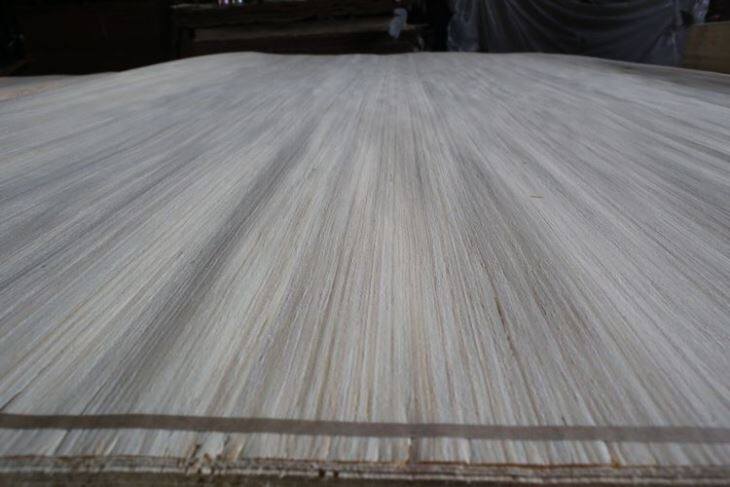
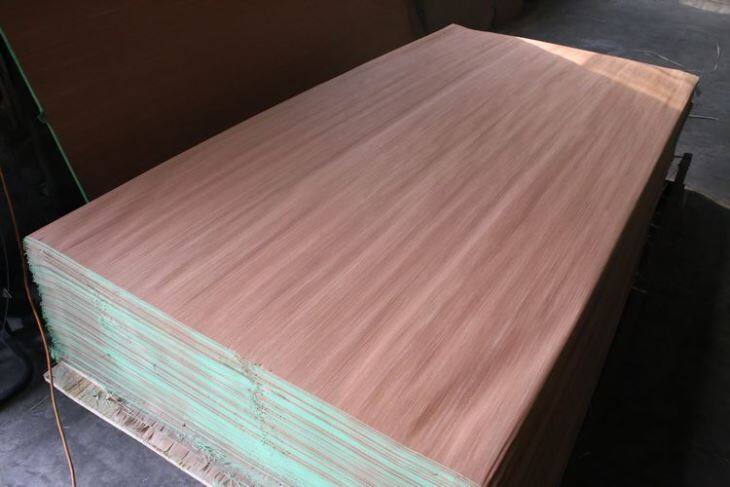
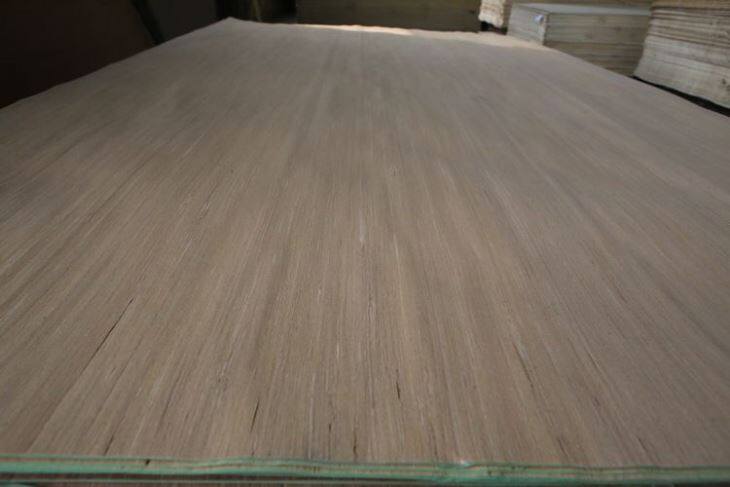
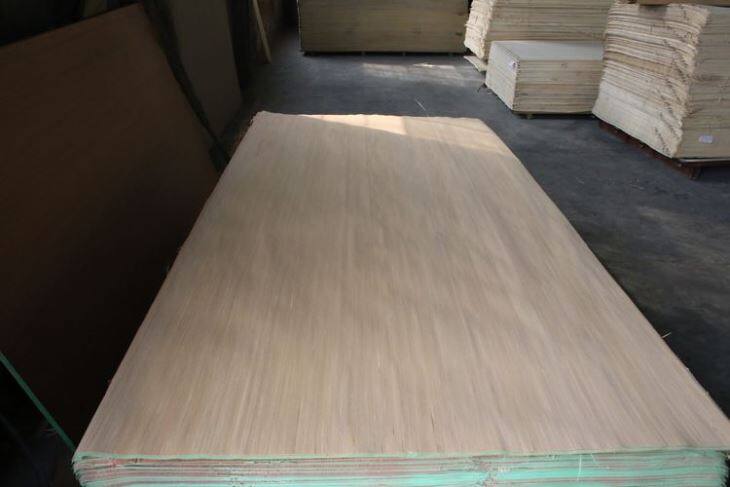
Fineline Reconstituted Wood Veneers is a type of veneer re-sliced from veneer blocks, which are laminated and condensed with peeled Poplar veneers. A single color is dyed into the peeled veneers without any special designs in the condensed veneer blocks. When the veneer blocks are sliced at vertical direction, the veneers we get appears straight grains. This type of veneer is normally used as face and back of panels and even furniture.
Advantages of Fineline Reconstituted Wood Veneers
Moisture resistance: The characteristics of fine-line regenerated veneer are comparable to original wood boards, with good mechanical properties, moisture resistance and anti-corrosion properties.
Environmental protection and durability: In the manufacturing process of fine-line regenerated veneer, waste materials can be fully utilized, the consumption of natural resources is reduced, and it plays an important role in the environment and ecology. Compared with traditional boards, regenerated boards have also been greatly improved in terms of service life and durability.
Stability: Fine-line regenerated veneer has good durability and stability, is not easily affected by moisture, deformation, warping and other problems, and can be used in various harsh environments. At the same time, regenerated boards also have the characteristics of fireproof, waterproof, and anti-corrosion, which can meet the use needs of different scenarios.
Ecological cleanliness: Since more than 92% of the texture belongs to natural wood, the material is classified as an environmentally friendly material. In addition, since the material is produced from fast-growing tree species, its production does not cause any special harm to nature.
Aesthetics: Because there is no roughness or knots on it. After processing, the surface looks stylish and expensive.
Plasticity: Due to the curved structure and high plasticity parameters, the sheet is able to adopt different geometric configurations and recover its original size and shape after deformation. The sheet is used for finishing almost any surface (door facings, columns, tabletops, decorative elements).
Price: Compared to classic natural finishes, fine lines are relatively cheap.
Wide variety: A wide variety of textures, finishes, colors are available on the market. This allows one to choose a sheet with the best design, in line with the general style of interior decoration.
Applications of Fineline Reconstituted Wood Veneers
Fineline Reconstituted Wood Veneers can be used in the construction fields such as floors, walls, ceilings, partitions, partitions, etc., with good moisture-proof, sound-proof, heat-insulating and other characteristics. At the same time, they can also reduce the foundation load and save materials and costs.
Furniture field: Fineline Reconstituted Wood Veneers can be used to make various furniture, such as beds, wardrobes, bookcases, desks, etc. Recycled boards are durable, beautiful and environmentally friendly. In the home environment, it is less likely to affect the surface quality due to moisture, oxidation and other problems.
Packaging field: Fineline Reconstituted Wood Veneers can be used to make various packaging boxes. They have good moisture-proof, shock-proof, anti-corrosion and other characteristics, which can protect and fix goods during transportation. At the same time, the environmental protection characteristics of recycled boards also meet the requirements of modern packaging materials.
In short, the application prospects of Fineline Reconstituted Wood Veneers are very broad. Its advantages are environmental protection, durability, economy, and practicality, which can meet people's needs in different fields.
Production process of Fineline Reconstituted Wood Veneers
The procedure includes a number of key points.
1.Longitudinal cutting (peeling) of logs into blades - The log is dissolved into a tape of a certain thickness. The resulting tape is cut into sheets of a certain size.
2.Drying veneer sheets and their distribution depending on the color.
3.Deep staining - The veneer is dipped into a specialized container filled with dye.
4.Gluing. The veneer plates pre - Impregnated with paint are stacked and covered with a specialized adhesive with a dye so that the veneer has interlayers of a binder. When gluing, a fairly strong adhesion is formed between the individual veneer plates, and due to the addition of a dye to the adhesive composition, the finished fine-line veneer has a special visual effect.
5.Pressing. At this stage, the glued veneer bale is pressed under high pressure.
6.Planing. The resulting block is used to make fine-line engineering veneer sheets with a specific pattern and color.
How to Choose Fineline Reconstituted Wood Veneers
Wood Types
First, you must know what wood types you need for your woodworking project. Common wood types include:
● American wood types: White oak, red oak, walnut, cherry, ash, maple, pine, rosewood, etc.
● African wood types: Bubinga, Sapele, Zebra, Anigo, Wenge, Teak, Okoume, Ayous, Mahogany
● European wood types: Beech, Ash, Oak, Figured Sycamore, Eucalyptus
● Asian wood types: Chinese Ash, Oak, Birch, Basswood, Ebony, Teak, Bamboo
Wood Veneer Grain
Usually, the veneer slicing method determines the wood veneer grain. Such as cathedral grain (flush/flush), straight grain (quarter cut/crack cut), rotary cut, rough cut, cross cut, and other special grains.
Thickness and Tolerance
Wood veneer thickness is one of the main factors affecting the price. The most common thicknesses are 0.6mm, 0.55mm, 0.5mm, and the thickness tolerance is +/- 0.02mm.
Width
For natural wood veneers, the standard width is at least 90mm and above. The crown cut veneer leaf width is 100mm and above, and most are 150mm and above. For reconstructed veneers, the standard widths are 640mm and 1250mm. But all wood veneers can be spliced into large width boards.
Length
Most customers prefer 2500mm and above because they need to paste plywood, MDF or particleboard. In addition, some furniture manufacturers require random lengths from 1000mm to 3400mm. The standard length of reconstructed veneers is 2500mm. But some special projects require veneer lengths of up to 3 meters and above.
Quality grade
This is also one of the main factors affecting the price. The quality grade will also affect the appearance of the wood grain on the surface of the final project. Such as knots, patterns, discoloration and other defects.
Veneer joints
When buying jointed veneer, you need to understand the joint method clearly. There are six types of veneer joints: book joint, herringbone joint, sliding joint, diamond joint, random joint and special joint. Many carpenters use the jointed veneer layers to decorate furniture or walls.


