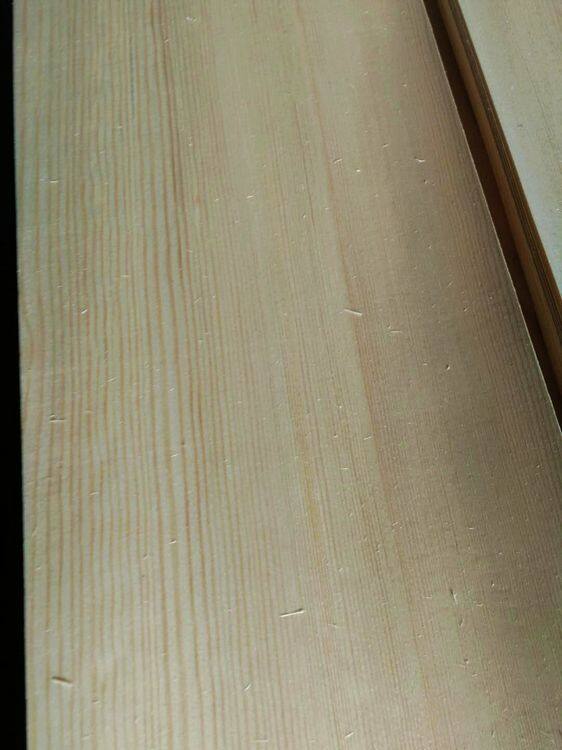
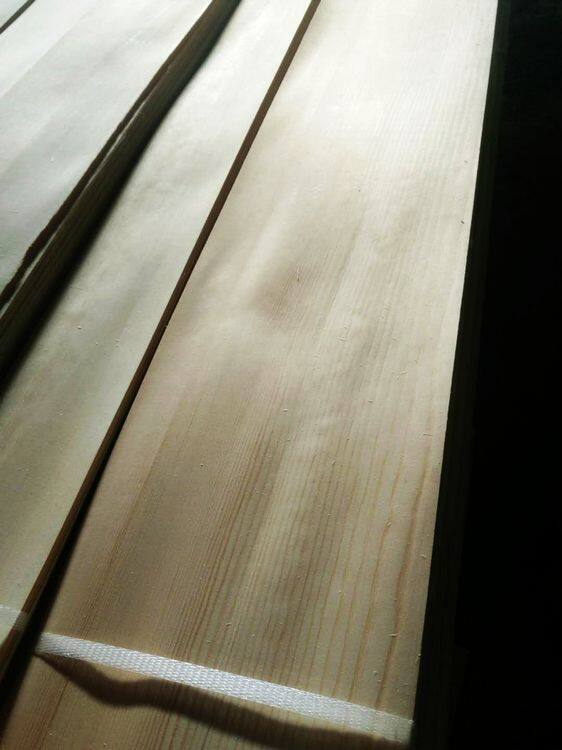
Sliced Pine Veneer

Sliced Pine Veneer

Pine veneer is pale yellow or light brown amber to a creamy white color that ages to deep golden yellow. It often comes in a random planked knotty, rustic variety as well. Pine is a softwood, lightweight and easy to work with. It has a satiny texture and alternating tight and porous grains and accepts stains and finished after conditioning.
Send Inquiry
Description
Technical Parameters
 
Product Parameters


Wood Name:

Camphor Pine

Botanic Name:

Pinus sylvestris

Origin:

China

Thickness:

0.50 – 0.60 mm

Width:

100 mm+

Length:

2000-3000 mm+

Grain:

Straight, crown

Density:

0.48 (after drying)

Grade:

A/B/C/D

Certification:

N/A

Application:

Panels (plywood, MDF, blockboard, etc.), furniture


Features of Sliced Pine Veneer


Relatively cheap
One of the biggest reasons Sliced Pine Veneer is so cheap compared to other types of wood is its availability. You can find it growing all over the world, and this reduces sourcing costs. Also, you have to consider how quickly pine trees grow in comparison to other types of trees. This rapid growth rate means you can grow new trees quickly, harvest it much quicker and replace the pine as it gets used instead of having to sit and wait for another supply to come in.


Durable
Pine is a softwood, and this means that it won't be nearly as strong as some hardwoods you can get, like maple, cherry, or walnut. Yellow pine is slightly stronger than white pine, but they both have slightly lower densities than hardwood, and this density is what makes them prone to scuffs or scratches. However, pine is a very stiff type of wood which still makes it durable enough to use in residential and commercial spaces for furniture, panelling, cabinetry and more.


Long service life
How long your Sliced Pine Veneer timber lasts will depend on whether it's indoors or outdoors, treated or untreated, and the application you want to use it for. In above ground settings, pine is expected to last more than 40 years and has a life expectancy of more than 25 years when used in in-ground applications.


High moisture resistance
White pines, fir and other soft woods commonly used in modern construction give little protection against termites and rot. However, Sliced Pine Veneer has a much higher moisture resistance than many other types of wood, and this helps it resist rotting and decay. If you leave it untreated and expose it to the elements, especially water or wet conditions, it can start to rot in as little as six months to a year. If you seal it and maintain it, Sliced Pine Veneer can last for 10 to 15 years without any significant issues. Pressure-treated Sliced Pine Veneer is very resistant to decay or rotting, and this is what a lot of people choose to use for outdoor applications.


What is Sliced Pine Veneer


Pine veneer is pale yellow or light brown amber to a creamy white color that ages to deep golden yellow. It often comes in a random planked knotty, rustic variety as well. Pine is a softwood, lightweight and easy to work with. It has a satiny texture and alternating tight and porous grains and accepts stains and finished after conditioning. A clear coat is the best option to preserve the wood's natural beauty.


Applications of Sliced Pine Veneer


Sliced Pine Veneer is mostly used in the construction and paper industries. Due to its lightweight nature, wide accessibility, low price point, and flexibility, you can utilise it in a range of applications, such as domestic and commercial structural timber, flooring, furniture, sleepers, landscaping and more. For the construction industry, Sliced Pine Veneer is very popular. It's also a standard material to use in creating cabinets or for roofing foundations. The paper industry uses pine pulp to create sheets of paper. Also, the resin some species of pine produces is a very important source of turpentine.


How to maintain Sliced Pine Veneer
 

If you are simply wiping off dust, use a soft cloth dipped in detergent. Pay attention when wiping and try to wipe along the grain. Do not use rough rags or dry cloths, as this may cause minor scratches on the surface of the Pine Veneer.


Try not to let the Pine Veneer come into contact with corrosive liquids such as nail polish.


When you need to place hot things on Pine Veneer, remember to put a mat in advance. If the food is accidentally knocked out, it may damage the Pine Veneer.


Proper waxing and maintenance is required on the Pine Veneer. But please avoid overuse of wax products. This will make the Pine Veneer prone to spots and lose its original luster and color.


Needs to be protected from insects. When there are no moths, you can apply some anti-insect coatings, such as raw tung oil, varnish, etc., on the surface of the Pine Veneer, evenly on the inside and outside; when there are pests, you can buy some pesticides for spraying, or you can wipe them with diesel , put it in the sun to dry, then wash it with laundry detergent and dry it again.


You can place a fish tank or water basin near the Pine Veneer to maintain a certain humidity in the environment and prevent cracking.


Frequently Asked Questions
 

Q: Which veneer cut is best?

A: Generally, slicing veneer produces more of a solid lumber appearance associated with the manner in which the half or quarter log is positioned in the slicer. Veneer leaves are kept in order as they are cut from the log to ensure a consistent appearance, making sliced veneer generally more prized than rotary cut veneer.

Q: How thick is pine veneer?

A: Flexi Wood Veneer is a highly flexible paper backed wood veneer sheet that can be used for surfacing curved areas without the problems of splitting or splintering. It is extremely flexible, easy to handle and can be cut with scissors or a craft knife. Thickness: 0.6mm.

Q: How can you tell if furniture is pine?

A: Pine - An extremely common wood, pine is lightweight and resists shrinking or swelling, however it is prone to splitting. The timber commonly has straight grain and is white or pale yellow, which darkens over time. Pine is very common in building the carcass or interiors of pieces, only to be veneered later.

Q: Is pine cheap wood for furniture?

A: Pine is an inexpensive, lightweight wood that can be yellowish or whitish with brown knots. It's often used for rustic pieces, like farmhouse-style tables.

Q: How do you rejuvenate pine furniture?

A: Ideally, using sandpaper or a stripping tool or if you're not comfortable doing that, take it to a professional wood cleaner or carpenter. From here, if the stain has been removed from sanding it down, you can simply refinish the surface with an oil or wax.

Q: What is the life expectancy of pine wood?

A: How long your pine timber lasts will depend on whether it's indoors or outdoors, treated or untreated, and the application you want to use it for. In above ground settings, pine is expected to last more than 40 years and has a life expectancy of more than 25 years when used in in-ground applications.

Q: What stain is best for pine wood?

A: Use gray, green or blue wood stains. Indoors, wood stain colors for pine vary from white to blue or green, allowing you to stain pine furniture to complement other décor.

Q: Is it better to varnish or wax pine furniture?

A: Compared to the waxed finish for wooden furniture, the protection offered by a varnish will be more durable over time. We recommend waxing especially for decorative purposes, to embellish a wooden piece of furniture while providing it with a certain degree of protection.

Q: What does Danish Oil do to pine?

A: Once applied, Danish Wood Oil will help the wood repel liquid stains and spills as well as protecting the wood from wear & tear. This makes Danish Oil ideal for wood maintenance.

Q: Pine Vs. Oak: which wood makes the better floor?

A: When choosing the best wood for living room flooring, dining room flooring or bedroom flooring, the debate often comes down to Pine Vs. Oak. Over the centuries, these species have been two of the most popular sources of flooring in American homes. Yet these woods could hardly be more different. Let's take a quick look at the pros and cons of Pine Vs. Oak to see which type of wood might be best for your new floors.
Pine: the wood that built America
Pine is a softwood that's found in plentiful supply throughout the country. Heart Pine and Eastern White Pine are the varieties most commonly used for floors. Eastern White Pine was favored by early New England colonists who used it as floors, structural timbers, siding and wainscoting. Eastern White Pine floorboards are very light in color and feature smooth grain with beautiful knots, providing a wide range of possibilities for finishes.
Heart Pine flooring was used in buildings throughout the Eastern and Southeastern seaboard and is considered the wood that spawned the American Industrial Revolution. Heart Pine offers a richer palette with colors ranging from pumpkin and amber to darker, more modern hues. The grain on Heart Pine is more prominent, ranging from boards with tight knots and vertical grains to planks with wider lines, extravagant knots and cathedral wood patterns.
Oak: the most versatile hardwood
Oak is a hardwood that's also grown widely in the U.S. and it's considered the most popular species for hardwood floors. Red Oak floorboards have a deep salmon hue in the heartwood and wider, more prominent grain with occasional swirls. White Oak features hues of nutty brown and tan and is slightly darker than Red Oak. The grain on a White Oak Plank is tighter and more uniform. Oak floors are popular because they're considered to offer a perfect balance of beauty, stability, durability and affordability.

Hot Tags: sliced pine veneer, China sliced pine veneer manufacturers, suppliers, factory, grey oak veneer, , elm veneer, , chinese elm veneer

Send Message