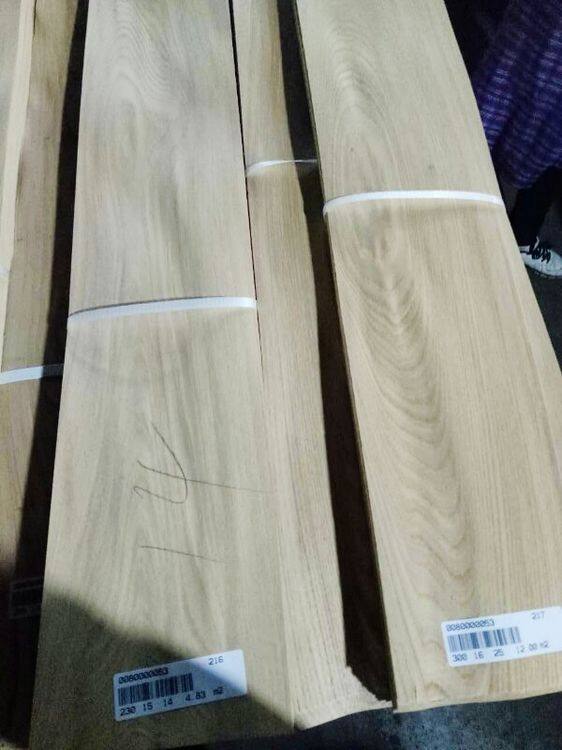
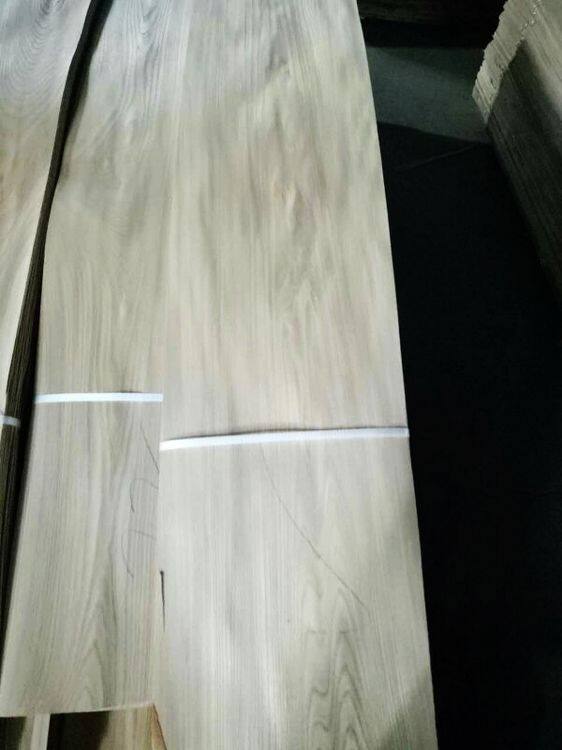
Sliced Elm Veneer

Sliced Elm Veneer

Description
Wood Name:Elm
Botanic Name:Ulmus spp.
Origin: China
Thickness:0.50 mm
Send Inquiry
Description
Technical Parameters
 
Product Parameters


Description


Wood Name:

Elm

Botanic Name:

Ulmus spp.

Origin:

China

Thickness:

0.50 mm

Width:

100 mm+/130 mm+

Length:

2000 mm+/2500 mm+

Grain:

Straight, crown

Density:

0.68 (after drying)

Grade:

A/B/C/D/E

Grading Rule:

HPVA standards

Certification:

N/A

Application:

Panels (plywood, MDF, blockboard, etc.), furniture


What is Sliced Elm Veneer


Elm Veneer, has a moderately straight grain with nice cathedrals. Red Elm is similar to Grey Elm in that it can be sold as Soft. It is great for cabinetry and woodworking.American Red Elm Veneer is primarily found in North America and is sometimes also called Slippery Elm.


Advantages of Sliced Elm Veneer
 
Beauty and Aesthetics
One of the primary reasons for choosing Sliced Elm Veneer for furniture and styling stools is its inherent beauty. The rich, warm tones and distinct grain patterns contribute to a visually appealing and unique finish. Elm wood exhibits a charming blend of straight and swirling patterns, creating an eye-catching visual texture that elevates any space's aesthetics. Nothing screams statement more than our elm wood coffee table and matching elm side tables.
Durability and Strength
Sliced Elm Veneer is renowned for its exceptional durability and strength. Its density allows it to withstand the test of time, making it a reliable choice for furniture that is meant to last for generations. Elm wood furniture can easily withstand daily use and still retain its original beauty, ensuring a long-lasting investment for your home.
Resistance to Splitting
Another advantage of Sliced Elm Veneer is its resistance to splitting. The interlocking grain pattern enhances its structural integrity, preventing cracks or splits even in challenging environmental conditions. This characteristic makes elm wood an excellent choice for furniture that will experience heavy usage or frequent movement.
Easy Maintenance
Sliced Elm Veneer requires minimal maintenance, adding to its appeal for furniture and styling stools. Regular dusting and occasional polishing with a wood-specific cleaner will help preserve its natural beauty. Elm wood furniture also tends to age gracefully, acquiring a distinct patina that adds character and charm to the piece over time.


Applications of Sliced Elm Veneer


1. Furniture manufacturing
Sliced Elm Veneer can be used in furniture manufacturing, including panel furniture and solid wood furniture. Elm has the characteristics of uniform color, clear texture and moderate hardness, making the furniture made very beautiful and practical.


2. Building decoration
Sliced Elm Veneer can be used for building decoration materials, such as floors, wall panels, ceilings, etc. Elm materials have moderate density and hard texture, can withstand long-term use, and are often used for decoration in public places.


3. Packaging industry
Sliced Elm Veneer are also a commonly used packaging material, which can be used to produce boxes, baskets and shelves. Elm is relatively soft, easy to process, and light in weight, so it can effectively improve the efficiency of packaging.


4. Cultural supplies
Sliced Elm Veneer can also be used to make some cultural supplies, such as calligraphy and painting fans, seals, etc. These cultural supplies are not only practical, but also have high artistic value, and the requirements for material quality during the production process are very high.

In general, Sliced Elm Veneer have the characteristics of uniform color, clear texture and moderate hardness, which are very suitable for furniture, construction, packaging and cultural supplies, and are widely used in various fields.


Frequently Asked Questions
 

Q: What is sliced veneer?

A: Plain slicing occurs when a log is only turned a few inches at a time when slicing it, versus a constant turn and peeling method used for Rotary Cut veneer. Plain Sliced veneer produces a cathedral grain pattern, similar to the pattern produced when plain sawn lumber is produced.

Q: How thick is sliced veneer?

A: Originally veneers were sawn cut to about 1.5mm but with the invention of veneer slicing machines, the standard thickness was reduced to 0.6mm and less.

Q: Are wood veneers good?

A: The truth is that veneer furniture can potentially be lighter weight, more sustainable, and generally more affordable than solid wood furniture. All three of these benefits are a direct result of how veneer furniture is constructed.

Q: What wood is closest to elm?

A: Lookalikes. Elm is sometimes confused with ash, though the two can be separated based on elm's wavy latewood bands.

Q: What is the best finish for elm wood?

A: Varnishes are ultimately the most durable finish but if it becomes worn, scratched, chipped or damaged over time, there is little choice but to sand back to bare wood and re-varnish. Varnishes are available in Matt.

Q: Is elm better than pine?

A: Elm is harder to find and source than the aforementioned woods, elm wood is heavier than pine and has a more unique and distinctive patina with tight, striped lines for a graining pattern. Extremely durable and long lasting, elm wood has a smoother texture.

Q: What are the benefits of elm wood?

A: Elm wood is strong and durable with a tight-twisted grain, and is resistant to water. It has been used in decorative turning, and to make boats and boat parts, furniture, wheel hubs, wooden water pipes, floorboards and coffins.

Q: Is Elm Good for Furniture?

A: Elm is hard and strong, making it ideal for furniture that needs to withstand a lot of stress. Elm scores 830 on the Janka Wood Hardness Scale. It is classified as a "soft hardwood." This means it is very durable and strong, just softer than other hardwoods.

Q: How to seal elm?

A: Sand and clean, stain if needed, brush with shellac to seal the color (one part shellac to two to three parts denatured alcohol). Apply and remove fillers as needed. Once dry, wait at least three days to cure, seal with shellac. You can use shellac as the final finish or go ahead and varnish it.

Q: How to tell if a wood is elm?

A: The sapwood is usually white or off-white. Young trees of American elm tend to have broad sapwood and a light brown to gray heartwood. The sapwood darkens in color due to staining. Red elm usually has broad heartwood and a very typical reddish brown color.

Q: How do you prevent elm bugs?

A: The best management of elm seed bugs is to seal cracks and crevices on the exterior of buildings so the insects cannot enter. Indoors they are best managed by vacuuming. Movement of the bug to indoors can also be limited by use of certain insecticides applied to areas of the building exterior where the bugs can enter.

Q: Does elm wood change color?

A: The wood darkened to a medium yellowish brown. Elm is not the easiest wood to finish. dry out some scraps and experiment. If your Elm has a yellowish color when wet, its probably Chinese Elm, and will darken to a honey brown color as it ages.

Q: How to choose elm furniture?

A: Verify elm products from wood grain and scars. From the direction of the wood grain, especially whether the corresponding parts of the furniture are in the same direction, the corresponding ones are pure elm furniture, and the judgment of scars is the same as that of wood grain.
Check the craftsmanship of elm furniture from the interface. Larger and heavier furniture usually has reinforced screw protection blocks at the corners, and they are glued and fixed. Check the backboard to see if it is well inlaid and whether there are screws. This is also a criterion for judging when buying elm furniture.
Check whether there are any defects in the details of elm furniture and whether there are any quality problems with the furniture. When checking the details of the furniture, pay special attention to the load-bearing parts, which should be well-structured, firm, without cracks, gaps, and breaks.
Note that the materials of elm furniture are divided into "new elm" and "old elm". New elm mainly refers to newly cut elm. Old elm generally refers to old materials that have been stored for decades after being cut down, or wood removed from old houses or old furniture. However, some industry insiders say that old elm does not refer to old materials, but a kind of wood grown in Hebei, Shanxi, Shandong and other places. Although they are also called "elm", the color and texture are different from the elm grown in the northeast, and the wood is harder, so locals generally call them "old elm". New elm furniture mainly has three colors: bright yellow, dark brown and coffee brown. The wood texture on the surface of the furniture is fine and straight, and the style is mainly modern and simple. The style of old elm furniture is biased towards Chinese classical style, and a double bed of the same size is priced at more than 20,000 yuan, which is more than twice the price of new elm furniture.
Why is the price of old elm furniture several times higher than that of new elm furniture? The old elm material itself is very rare, which raises the price of raw materials and directly affects the price of the final product. On the other hand, the price increase is due to the complicated craftsmanship. He mentioned that the furniture made of old elm is mostly Chinese style, and the production process used is relatively complicated, which is also the main reason why the price is higher than that of new elm furniture.

Q: What is the difference between an elm tree and an oak tree?

A: Origin
American Elm (Ulmus americana), one of the most popular species of elm timber, hails from the Eastern Midwest United States. Though once widespread, Dutch elm disease has impacted its availability. Oak, particularly White Oak (Quercus alba), grows mainly in the Eastern United States. With a rich history diverse applications in flooring, boatbuilding, and furniture, White Oak stands out for its strength and durability.
Appearance
Elm and Oak, two popular hardwoods, showcase unique appearances in woodworking. American Elm has light to medium reddish-brown heartwood with interlocked grain. Its sapwood is paler and easy to distinguish, giving it a visually appealing contrast. White Oak's heartwood is light to medium brown with an olive cast and displays prominent ray fleck patte in quartersawn sections. The grain in Oak is usually straight, contributing to its classic and uniform appearance. It's not easy to choose between elm and oak based on appearance because both wood species feature stunning aesthetics with unique color variations, grain patterns, and textures, offering numerous possibilit for woodworkers.
Hardness & Strength
ls elm hard or soft wood? Elm is a soft hardwood, meaning it is a hardwood with a soft structure.However, still quite strong and somewhat durable, which makes it suitable for a wide range of applications.American Elm boasts a Janka Hardness of 830 lbf, making it moderately hard and strong. It offers good resistance to wear and impact. Due to its interlocked grain, elm is also quite resilient against splitting.White Oak exhibits a notable Janka Hardness of 1,350 lbf, making it superior to elm in terms of strength an density. The straight grain in Oak enhances its overall strength. It is harder and heavier than elm Durability American Elm is rated as non-durable and can be easily damaged by insect attacks. Living elm trees are particularly vulnerable to Dutch elm disease.
Workability
Working with elm can be challenging due to its interlocked grain, especially on quartersawn surfaces.Planing may result in tearout, and its poor dimensional stability sometimes makes working difficult.Elm timber responds well to steam bending and holds nails and fasteners securely. Oak is more cooperative in terms of workability and can be worked with both hand and machine tools, producing favorable results. Although it has moderate shrinkage values, Oak's is overall easier to work with than elm, allowing for smoother processes in crafting fine furniture, cabinetry, and other detailed woodworking projects.
Price & Availability
Is oak wood costly? Well, yes. It's among expensive hardwoods. This is because of the high demand and popularity of oak owing to its mazing appearance, durability, and workability. As a slow-growing tree, oak timber has limited availability compared to its high demand. ls elm wood expensive? The price of elm ranges from moderate to high depending on availability.In parts where elm production is affected by the Dutch Elm disease, the cost could be on the higher side due to limited availability.

Hot Tags: sliced elm veneer, China sliced elm veneer manufacturers, suppliers, factory, chinese elm veneer, elm veneer, grey oak veneer

Send Message